
Apron Belly vs FUPA | Understanding the Difference in 2026
Many people confuse an apron belly and FUPA because both appear in the lower abdominal region and can create visible fullness. However, these two conditions are different in terms of location, tissue structure, and overall appearance.
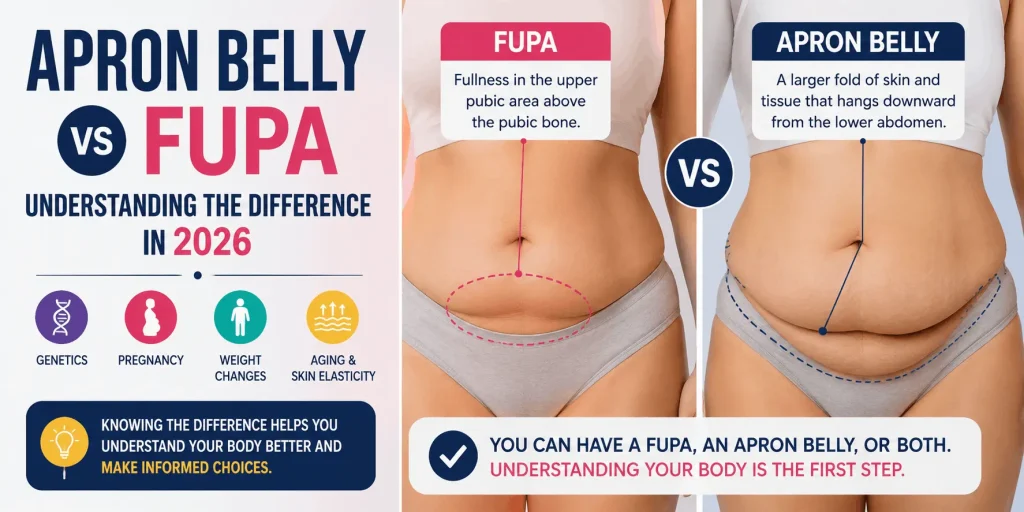
A FUPA refers to fullness or excess tissue in the upper pubic area above the pubic bone, while an apron belly involves a larger fold of skin and tissue that hangs downward from the lower abdomen. Understanding these differences helps avoid misconceptions about body shape and weight.
Factors such as genetics, pregnancy, aging, weight changes, and skin elasticity can influence how these areas appear. Knowing whether the change is a FUPA, an apron belly, or both allows for a clearer understanding of individual body structure.
What Is a FUPA? Understanding the Fatty Upper Pubic Area
FUPA stands for Fatty Upper Pubic Area or Fat Upper Pubic Area. It refers to a visible fullness, bulge, or soft layer of fat and tissue located above the pubic bone and below the lower abdomen.
This area is known as the mons pubis, which naturally contains fatty tissue that helps cushion and protect the pubic bone.
A FUPA is different from an apron belly because it is concentrated in the upper pubic region rather than forming a hanging fold from the lower abdomen.
Its appearance can vary depending on genetics, body fat distribution, skin elasticity, aging, pregnancy history, and weight changes.
A visible FUPA is a common body variation and does not automatically indicate excess weight or a health problem.
What Is an Apron Belly? Understanding the Lower Abdominal Overhang
An apron belly refers to a hanging fold of excess skin, fat, and soft tissue that extends downward from the lower abdomen.
It is medically known as a pannus or panniculus and differs from ordinary belly fat because it involves an overhanging fold rather than only increased abdominal size.
The fold may appear below the belly button and, depending on its size, can extend over the pubic area or toward the upper thighs.
An apron belly develops when abdominal tissues change and the skin does not fully return to its previous position after stretching.
Its appearance varies between individuals based on factors such as body composition, skin elasticity, age, genetics, and previous body changes. It can occur in both men and women.
Apron Belly vs FUPA: Location of the Tissue
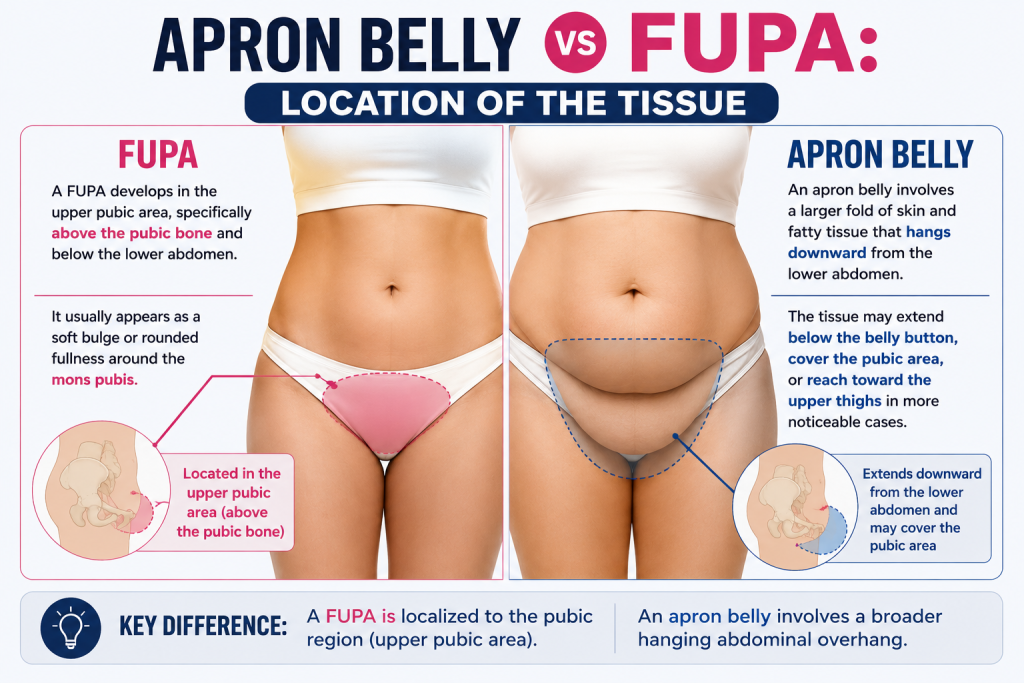
The main difference between an apron belly and a FUPA is the location where the excess tissue is concentrated.
A FUPA develops in the upper pubic area, specifically above the pubic bone and below the lower abdomen. It usually appears as a soft bulge or rounded fullness around the mons pubis.
An apron belly, on the other hand, involves a larger fold of skin and fatty tissue that hangs downward from the lower abdomen. The tissue may extend below the belly button, cover the pubic area, or reach toward the upper thighs in more noticeable cases.
While both areas are located near the lower abdomen, a FUPA is localized to the pubic region, whereas an apron belly involves a broader hanging abdominal overhang.
Apron Belly vs FUPA: Difference in Appearance
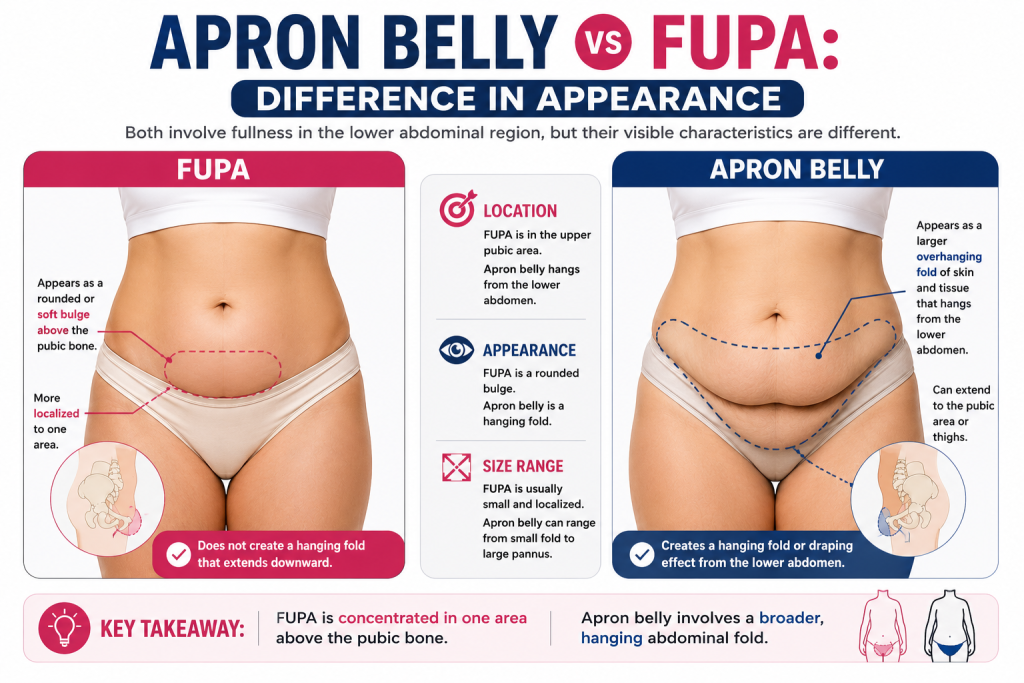
An apron belly and FUPA can appear similar because both involve fullness in the lower abdominal region, but their visible characteristics are different. A FUPA usually appears as a rounded or soft bulge located above the pubic bone.
It is generally more localized and does not create a hanging fold that extends downward from the abdomen. An apron belly appears as a larger overhanging fold of skin and tissue that hangs from the lower abdomen, often creating a draping effect.
The size of an apron belly can range from a small fold to a larger pannus that reaches the pubic area or thighs. The main visual difference is that FUPA is concentrated in one area, while an apron belly involves a broader hanging abdominal fold.
Apron Belly vs FUPA: Type of Tissue Involved
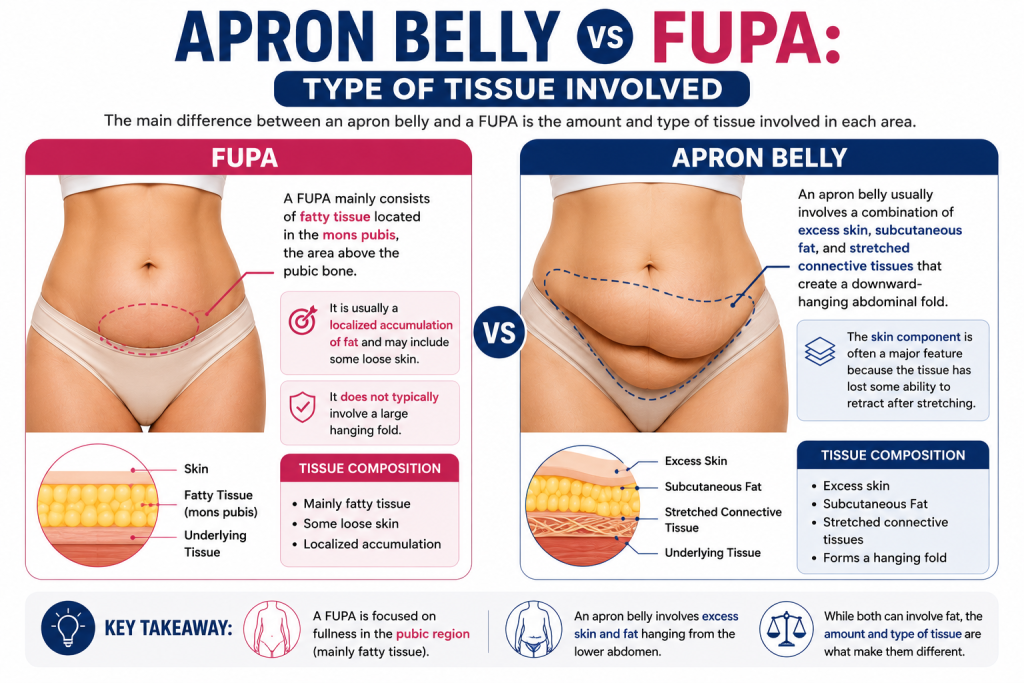
The main difference between an apron belly and a FUPA is the amount and type of tissue involved in each area.
A FUPA mainly consists of fatty tissue located in the mons pubis, the area above the pubic bone. It is usually a localized accumulation of fat and may include some loose skin, but it does not typically involve a large hanging fold.
An apron belly usually involves a combination of excess skin, subcutaneous fat, and stretched connective tissues that create a downward-hanging abdominal fold. The skin component is often a major feature because the tissue has lost some ability to retract after stretching.
While both conditions can involve fat, an apron belly is more associated with excess tissue hanging from the abdomen, whereas a FUPA is focused on fullness in the pubic region.
Apron Belly vs FUPA: How Each Condition Develops
An apron belly and FUPA develop through different changes in the lower abdominal area.
A FUPA develops when fat or soft tissue becomes more noticeable in the upper pubic region above the pubic bone. Factors such as genetics, weight changes, aging, pregnancy, and natural fat distribution can influence its appearance.
An apron belly develops when the skin, fat, and supportive tissues of the lower abdomen stretch and do not fully return to their previous position.
Major weight fluctuations, pregnancy, reduced skin elasticity, and changes in abdominal structure can contribute to the formation of the hanging fold.
While both conditions can be affected by body changes, an apron belly involves a larger abdominal tissue overhang, whereas a FUPA is more localized to the pubic area.
Apron Belly vs FUPA: Common Causes and Risk Factors
Apron belly and FUPA share some possible contributing factors, but they develop in different areas of the body.
A FUPA is commonly influenced by factors such as genetics, natural fat distribution, weight gain, aging, hormonal changes, and pregnancy-related body changes. These factors can increase fullness in the upper pubic region.
An apron belly is more often associated with major weight fluctuations, pregnancy, significant weight loss, reduced skin elasticity, and changes in abdominal tissue support.
The key difference is that an apron belly involves stretched skin and a hanging lower abdominal fold, while FUPA mainly involves localized fat or soft tissue above the pubic bone.
Individual factors such as body structure, skin response, and weight history determine how these changes appear.
Apron Belly vs FUPA in Women
In women, both an apron belly and FUPA can appear in the lower abdominal region, but they involve different areas and tissue patterns.
A FUPA develops in the mons pubis, the area directly above the pubic bone, and usually appears as localized fullness or a soft bulge. It can become more noticeable after pregnancy, weight changes, aging, hormonal shifts, or genetics.
An apron belly involves a larger fold of excess skin, fat, and tissue that hangs downward from the lower abdomen. Pregnancy and major body changes can stretch abdominal tissues, sometimes leaving a noticeable overhang.
Women may experience either condition regardless of body size, as individual factors such as skin elasticity, fat distribution, and body structure influence how these areas develop and appear.
Apron Belly vs FUPA in Men
In men, an apron belly and FUPA are different types of lower abdominal changes based on where the tissue is located and how it appears.
A FUPA in men refers to extra fat or soft tissue above the pubic bone and below the lower abdomen.
It usually appears as a localized bulge and may become more noticeable with weight gain, aging, genetics, or changes in body composition.
An apron belly involves a larger fold of excess skin, fat, and tissue that hangs downward from the abdomen. It is often associated with major weight changes and reduced skin elasticity.
While both can occur in men, a FUPA is concentrated around the pubic region, whereas an apron belly affects a broader area of the lower abdomen.
Can You Have Both FUPA and an Apron Belly at the Same Time
Yes, a person can have both a FUPA and an apron belly at the same time because they involve different areas of the lower abdominal region. A FUPA affects the upper pubic area, creating fullness or a soft bulge above the pubic bone.
An apron belly involves a larger fold of excess skin, fat, and tissue that hangs downward from the lower abdomen. When someone experiences significant body changes, such as weight fluctuations or pregnancy, both areas may become more noticeable.
In this situation, the pubic area may have additional fullness while the lower abdomen develops an overhanging fold. Having both does not mean the conditions are the same; they remain separate changes based on their location and tissue structure.
Apron Belly vs FUPA: Physical Effects and Daily Challenges
The physical effects of an apron belly and FUPA depend on the amount of tissue involved and the individual’s body structure.
A FUPA is usually a localized fullness above the pubic bone and may mainly affect clothing fit, comfort, or body confidence.
An apron belly can create more noticeable physical challenges because the hanging fold may add weight to the lower abdomen and cause friction between skin surfaces. Larger folds may trap moisture, which can contribute to irritation or discomfort.
An apron belly may also influence movement, posture, and daily activities when the tissue becomes heavier.
While both conditions can affect self-image, their physical impact varies greatly depending on size, skin characteristics, and personal experience.
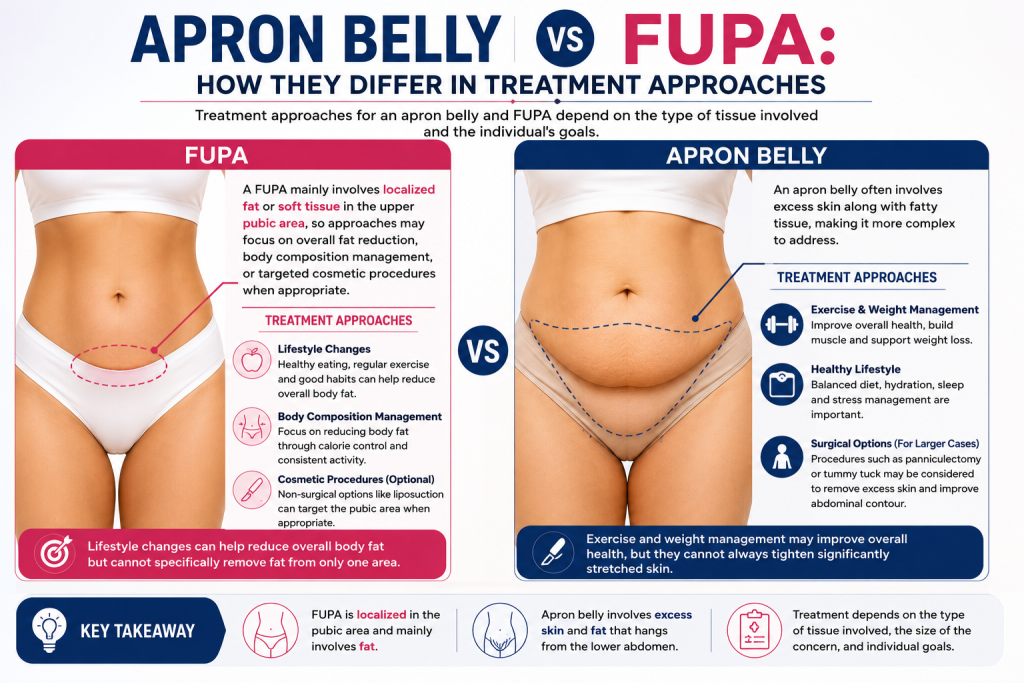
Apron Belly vs FUPA: How They Differ in Treatment Approaches
Treatment approaches for an apron belly and FUPA depend on the type of tissue involved and the individual’s goals.
A FUPA mainly involves localized fat or soft tissue in the upper pubic area, so approaches may focus on overall fat reduction, body composition management, or targeted cosmetic procedures when appropriate.
Lifestyle changes can help reduce overall body fat but cannot specifically remove fat from only one area.
An apron belly often involves excess skin along with fatty tissue, making it more complex to address. Exercise and weight management may improve overall health, but they cannot always tighten significantly stretched skin.
For larger apron bellies, procedures such as panniculectomy or tummy tuck may be considered to remove excess tissue and improve abdominal contour.
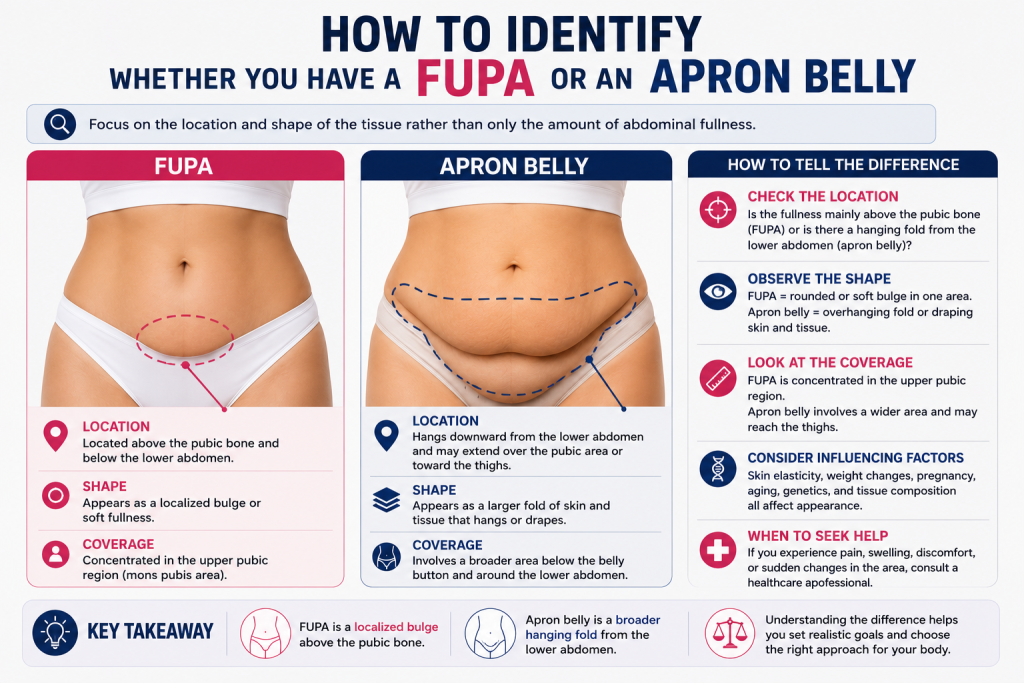
How to Identify Whether You Have a FUPA or an Apron Belly
To identify whether you have a FUPA or an apron belly, focus on the location and shape of the tissue rather than only the amount of abdominal fullness. A FUPA appears as a localized bulge or soft fullness above the pubic bone and below the lower abdomen.
An apron belly appears as a larger fold of skin and tissue that hangs downward from the lower abdomen and may extend over the pubic area or toward the thighs. The main difference is that FUPA is concentrated in the upper pubic region, while an apron belly involves a broader hanging fold.
Factors such as skin elasticity, body changes, and tissue composition influence appearance. If there are unusual symptoms like pain, swelling, or sudden changes, medical advice may be appropriate.
Related Guide

Conclusion
FUPA and apron belly are related lower abdominal changes but represent different areas and tissue patterns.
A FUPA is mainly focused on fullness above the pubic bone, while an apron belly involves a hanging fold that extends from the lower abdomen.
Some individuals may have one condition, while others may experience both at the same time. Understanding the difference is important because each body develops differently based on factors such as genetics, body composition, skin elasticity, and life changes.
Rather than judging these changes only by appearance, learning the anatomy behind them helps create realistic expectations and better awareness of personal body differences.