Diet for Apron Belly: What to Eat and Which Diet Is Best
Diet plays an important role in managing an apron belly when excess body fat is one of the underlying causes, but no specific diet can target fat loss from the lower abdomen or remove loose skin.
Sustainable weight loss occurs by reducing overall body fat through healthy eating patterns that provide adequate nutrition while supporting a calorie deficit.
The best diet is one that is balanced, nutritionally complete, and realistic enough to follow over the long term rather than a restrictive plan that promises rapid results.
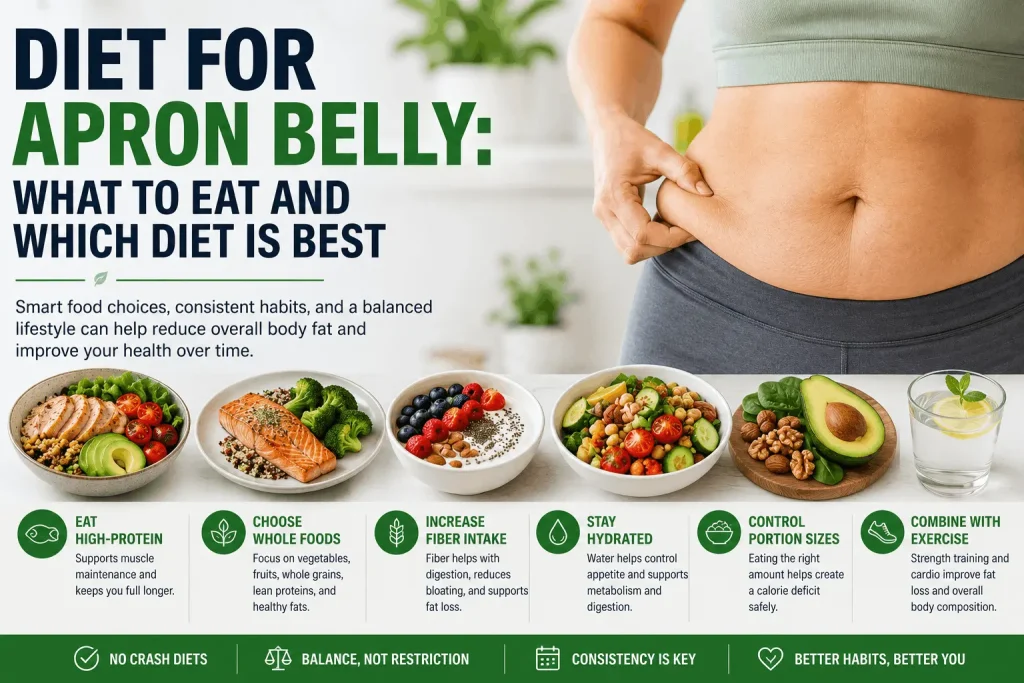
Several evidence-based eating patterns, including high-protein, Mediterranean, high-fiber, and calorie-controlled diets, may help with gradual fat loss when combined with regular physical activity.
Choosing a diet that matches your health needs, preferences, and lifestyle is often the key to achieving lasting results.
High-Protein Diet
A high-protein diet can support weight loss if excess body fat contributes to an apron belly, but it cannot remove loose or stretched skin.
Protein helps preserve lean muscle during weight loss, which is important for maintaining strength and supporting a healthy metabolism. It also promotes fullness, making it easier for some people to reduce their overall calorie intake without feeling excessively hungry.
Good protein sources include skinless poultry, fish, eggs, low-fat dairy, beans, lentils, tofu, and other soy-based foods. Rather than focusing only on protein, aim to include it as part of balanced meals with vegetables, whole grains, and healthy fats.
For lasting results, a high-protein diet should be combined with a sustainable calorie deficit, regular physical activity, and long-term healthy eating habits.
Mediterranean Diet
The Mediterranean diet is one of the most well-researched eating patterns for improving overall health and supporting sustainable weight loss.
If excess body fat contributes to an apron belly, following this diet may help reduce overall body fat over time when it is combined with an appropriate calorie intake.
It emphasizes vegetables, fruits, whole grains, legumes, nuts, olive oil, fish, and moderate amounts of lean poultry and dairy while limiting highly processed foods and added sugars.
This balanced approach provides fiber, healthy fats, and essential nutrients that can improve satiety and make long-term healthy eating easier to maintain.
However, the Mediterranean diet cannot remove loose skin caused by pregnancy, aging, or significant weight loss. If excess skin remains after fat loss, medical or surgical treatment may be necessary.
Calorie-Deficit Diet
A calorie-deficit diet is the most important dietary approach for reducing excess body fat, regardless of the specific eating pattern you follow.
A calorie deficit occurs when you consistently consume fewer calories than your body uses, encouraging it to draw on stored fat for energy. This may reduce the size of an apron belly if excess fat is a major contributing factor.
However, the deficit should be moderate and sustainable rather than extreme, as very low-calorie diets can increase muscle loss, nutritional deficiencies, and make long-term weight management more difficult. Prioritize nutrient-dense foods such as vegetables, fruits, lean proteins, whole grains, and healthy fats to meet your nutritional needs while reducing calories.
If an apron belly is primarily caused by loose skin, a calorie-deficit diet cannot remove the excess tissue.
High-Fiber Diet
A high-fiber diet can support healthy weight loss by increasing fullness and helping people naturally reduce their overall calorie intake.
Foods rich in fiber, such as vegetables, fruits, legumes, oats, and whole grains, generally take longer to digest and may help control hunger between meals. Many high-fiber foods are also nutrient-dense, making it easier to meet vitamin and mineral needs while maintaining a calorie deficit.
Increasing fiber intake gradually and drinking enough water can help reduce digestive discomfort as your body adapts.
Although a high-fiber diet may contribute to reducing overall body fat over time, it cannot specifically target fat from the lower abdomen or remove loose skin.
If an apron belly is primarily caused by excess skin, dietary changes alone will not eliminate it.
Low-Carbohydrate Diet
A low-carbohydrate diet can help some people lose weight by reducing their overall calorie intake and improving appetite control, particularly when it replaces refined carbohydrates with nutrient-dense foods.
Rather than eliminating carbohydrates completely, focus on limiting foods high in added sugars and refined starches while choosing vegetables, legumes, nuts, seeds, and moderate portions of whole grains when appropriate.
Adequate protein and healthy fats should also be included to support balanced nutrition and preserve muscle during weight loss.
Research suggests that low-carbohydrate diets can be effective for weight loss, but they are not consistently superior to other calorie-controlled diets over the long term.
Like any eating pattern, success depends on long-term adherence. A low-carbohydrate diet may reduce excess body fat, but it cannot remove loose skin that contributes to an apron belly.
DASH Diet (Dietary Approaches to Stop Hypertension)
The DASH (Dietary Approaches to Stop Hypertension) diet was originally developed to help lower blood pressure, but it can also support healthy weight management when followed with an appropriate calorie intake.
It emphasizes vegetables, fruits, whole grains, beans, lean protein, low-fat dairy, nuts, and seeds while limiting foods high in saturated fat, sodium, and added sugars.
This balanced eating pattern provides plenty of fiber, vitamins, minerals, and protein, which can help promote fullness and make healthy eating easier to maintain over time.
If excess body fat contributes to an apron belly, the DASH diet may help reduce overall fat through gradual, sustainable weight loss.
However, like any healthy diet, it cannot remove loose or stretched skin that remains after pregnancy or significant weight loss.
Plant-Based Diet
A well-planned plant-based diet can support healthy weight loss and improve overall nutrition if excess body fat contributes to an apron belly.
This eating pattern emphasizes vegetables, fruits, whole grains, legumes, nuts, and seeds while reducing or excluding animal-based foods, depending on individual preference. Many plant foods are naturally high in fiber and relatively low in calorie density, which may help increase fullness and reduce overall energy intake.
To maintain muscle mass during weight loss, include adequate plant-based protein sources such as beans, lentils, tofu, tempeh, edamame, and soy products.
A plant-based diet should also provide sufficient vitamin B12, iron, calcium, vitamin D, and omega-3 fatty acids when appropriate. Although it may reduce overall body fat, it cannot eliminate loose skin that forms an apron belly.
Intermittent Fasting
Intermittent fasting is an eating pattern that alternates between periods of eating and fasting rather than prescribing specific foods.
Common approaches include the 16:8 method, in which food is eaten within an eight-hour window, and the remaining sixteen hours are spent fasting. Some people find this approach helps reduce their overall calorie intake because they eat fewer meals, which may support gradual weight loss.
However, intermittent fasting is not inherently more effective than other calorie-controlled diets when total calorie and protein intake are similar. The best eating pattern is one that you can follow consistently while meeting your nutritional needs.
Intermittent fasting may help reduce overall body fat, but it cannot selectively reduce fat from an apron belly or remove loose skin caused by pregnancy, aging, or significant weight loss.
Related Guide

Conclusion
No single diet is the “best” diet for an apron belly because the most effective approach depends on the underlying cause and what you can maintain consistently.
Healthy eating patterns that promote a sustainable calorie deficit can reduce overall body fat, which may decrease the size of an apron belly caused by excess fat.
However, diet cannot tighten stretched abdominal muscles or remove loose skin left after pregnancy or significant weight loss. For the best long-term outcomes, combine a balanced diet with regular exercise, healthy lifestyle habits, and realistic expectations.
If excess skin remains despite reaching a healthy weight, discussing medical or surgical options with a qualified healthcare professional may be appropriate.