How to Hide Apron Belly in 2026 ( Tips & Tricks )
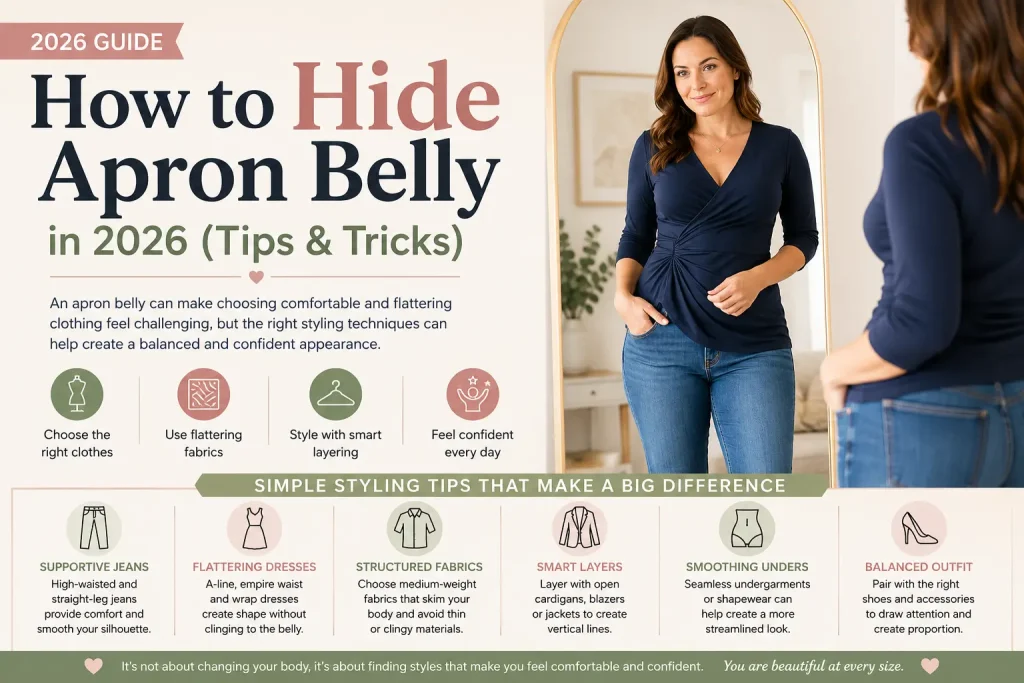
An apron belly can make choosing comfortable and flattering clothing feel challenging, but the right styling techniques can help create a balanced and confident appearance.
Hiding an apron belly does not mean changing your body; it is about selecting clothes, fabrics, and fits that work with your natural shape.
Simple choices such as wearing supportive jeans, structured fabrics, suitable dress styles, and comfortable layers can reduce focus on the lower abdominal area.
These tips are designed to improve clothing fit, comfort, and confidence while creating a more proportionate silhouette. Every body shape is different, so the best approach is finding styles that make you feel comfortable and confident in your everyday outfits.
Wear High-Waisted Jeans to Hide Apron Belly
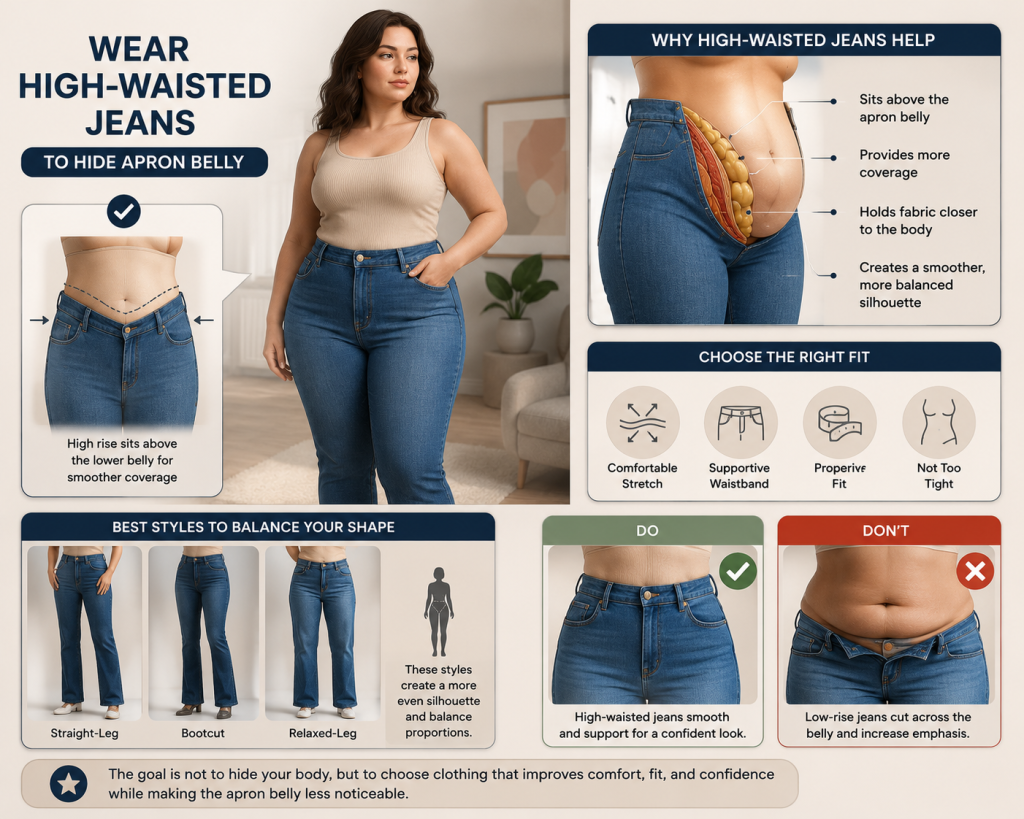
High-waisted jeans can help create a smoother and more balanced appearance by sitting above the lower abdominal area instead of cutting across the widest part of the belly.
A higher waistband provides more coverage and can help hold the fabric closer to the body, reducing the emphasis on the lower abdominal fold.
Choose jeans with a comfortable stretch, supportive waistband, and a proper fit rather than very tight styles, as excessive compression can create unwanted bulges. Straight-leg, bootcut, or relaxed-leg jeans can also help balance body proportions by creating a more even silhouette.
The goal is not to completely hide the body shape but to choose clothing that improves comfort, fit, and confidence while making the apron belly less noticeable.
Choose A-Line Dresses to Create a Flattering Shape
The term “apron belly” comes from the way the lower abdominal tissue hangs from the body, resembling the shape of an apron worn over clothing.
The hanging fold is usually made up of excess skin and fatty tissue that extends downward from the abdomen.
Unlike a typical rounded stomach shape caused by fat accumulation, an apron belly has a noticeable overhanging fold that drapes over the lower abdomen.
The appearance can range from a small fold below the belly button to a larger pannus that reaches the pubic area or thighs. The name is simply a visual description of the shape and position of the tissue, helping people understand this specific type of abdominal change.
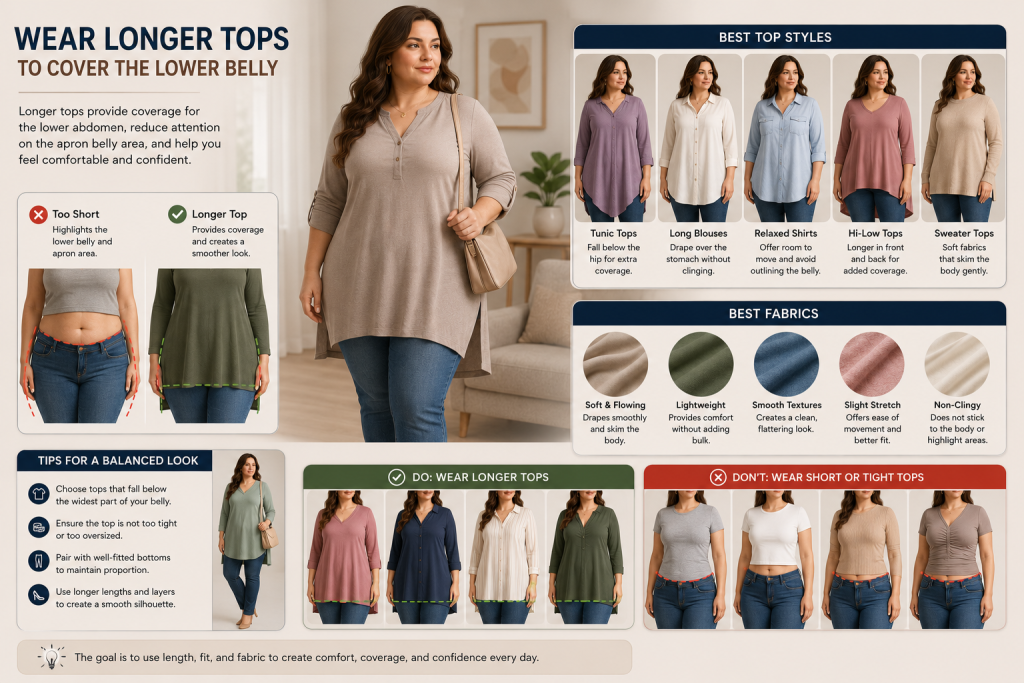
Wear Longer Tops to Cover the Lower Belly
Longer tops can help create better coverage around the lower abdomen by extending below the waistband and reducing attention on the apron belly area.
Styles that fall naturally over the stomach, such as tunics, longer blouses, or relaxed-fit shirts, can provide comfort without tightly outlining the abdominal fold. Choose tops that have enough room to move while still maintaining a structured shape, as overly oversized clothing can sometimes make the body appear less balanced.
Fabrics that drape smoothly instead of clinging to the skin often create a more flattering appearance.
Pairing longer tops with well-fitted bottoms can help maintain proportion and create a comfortable outfit. The goal is to use clothing length and fit to improve confidence and comfort.
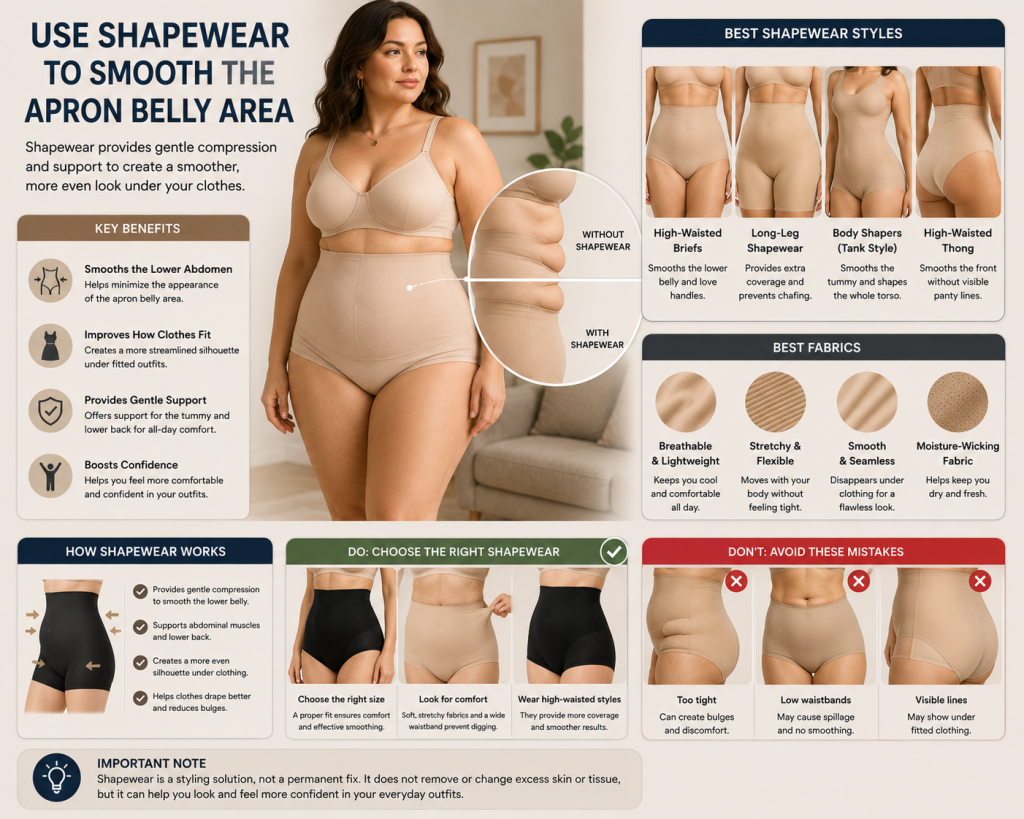
Use Shapewear to Smooth the Apron Belly Area
Shapewear can help create a smoother appearance under clothing by providing gentle compression and support around the lower abdominal area.
It can help reduce visible lines, improve how clothes fit, and create a more even silhouette when wearing fitted outfits. Choose shapewear designed with comfortable support rather than excessive compression, as very tight garments may feel uncomfortable or restrict movement.
High-waisted styles that extend over the lower abdomen are often more suitable for smoothing an apron belly area because they provide coverage without creating a noticeable break between body sections.
Shapewear does not remove or permanently change excess skin or tissue, but it can be a practical styling option for improving comfort and confidence in everyday clothing.
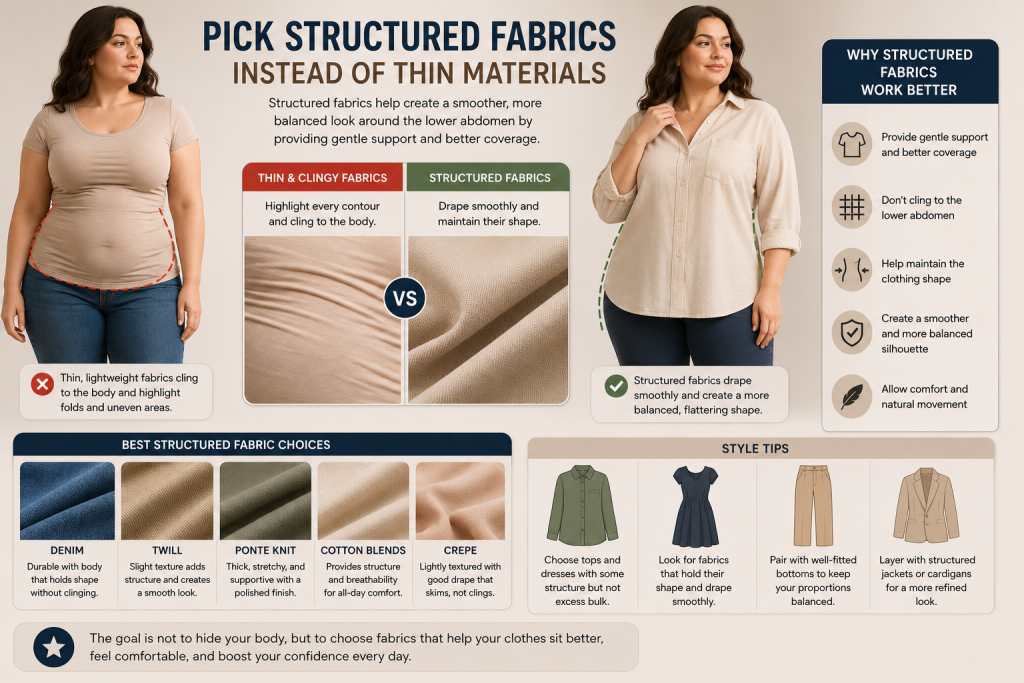
Pick Structured Fabrics Instead of Thin Materials
Choosing structured fabrics can help create a smoother and more balanced appearance around the lower abdomen.
Thin, lightweight materials often cling closely to the body and may highlight natural folds or uneven areas, making an apron belly more noticeable. Fabrics with a little more weight, structure, or drape can provide better coverage while maintaining a comfortable fit.
Materials such as thicker cotton blends, denim, or fabrics with a stable weave can help clothing maintain its shape instead of following every body contour.
However, structured does not mean stiff or oversized; the best choice is a fabric that provides support while allowing natural movement. The goal is to select materials that improve how clothes sit on the body and create a comfortable, confident appearance.
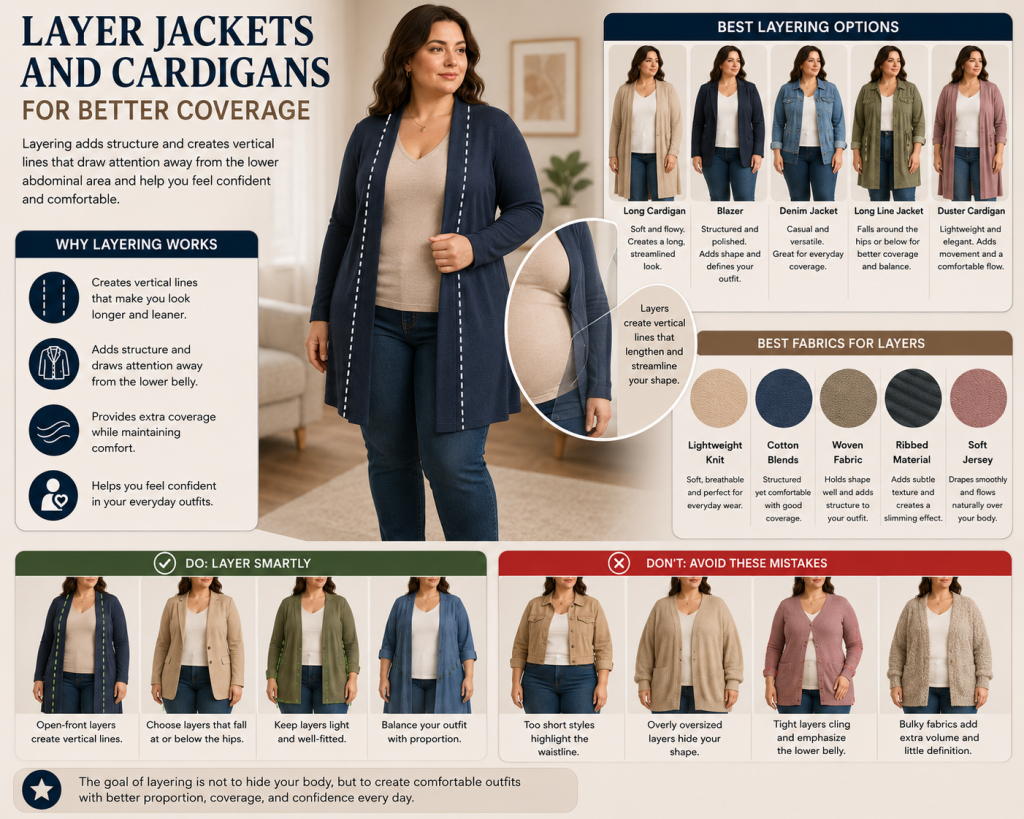
Layer Jackets and Cardigans for Better Coverage
Layering jackets and cardigans can help create a more balanced outfit by adding structure and drawing attention away from the lower abdominal area.
Open-front layers create vertical lines along the body, which can make the overall silhouette appear longer and more streamlined. Choose jackets and cardigans that fall around the hip area or slightly below, as very short styles may highlight the waistline.
Lightweight structured layers can provide coverage without adding unnecessary bulk, while softer fabrics can create a natural flow over clothing.
Avoid overly oversized layers that hide the entire body shape, as they may make the outfit appear less defined. The purpose of layering is not to completely conceal the apron belly but to create comfortable outfits with better proportion and confidence.
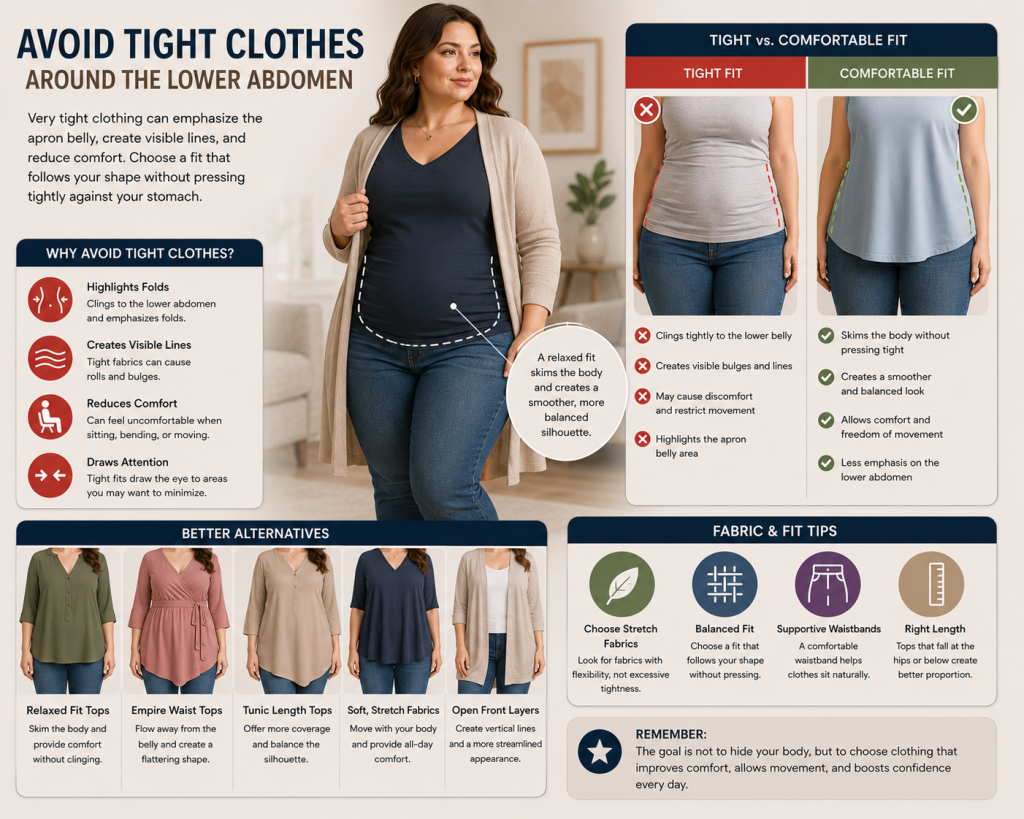
Avoid Tight Clothes Around the Lower Abdomen
Avoiding very tight clothing around the lower abdomen can help create a smoother and more comfortable appearance when dressing with an apron belly.
Clothes that tightly compress the stomach area may emphasize folds, create visible lines, and make the lower abdominal overhang more noticeable.
Instead, choose garments with a comfortable fit that follow the body’s shape without pressing tightly against the skin. Stretch fabrics can provide flexibility, but excessive tightness may reduce comfort during sitting, walking, or daily activities.
Clothing with a supportive waistband and a balanced fit can help the outfit sit naturally on the body. The goal is not to hide the body completely but to select clothing that improves comfort, allows movement, and creates a more proportionate silhouette.
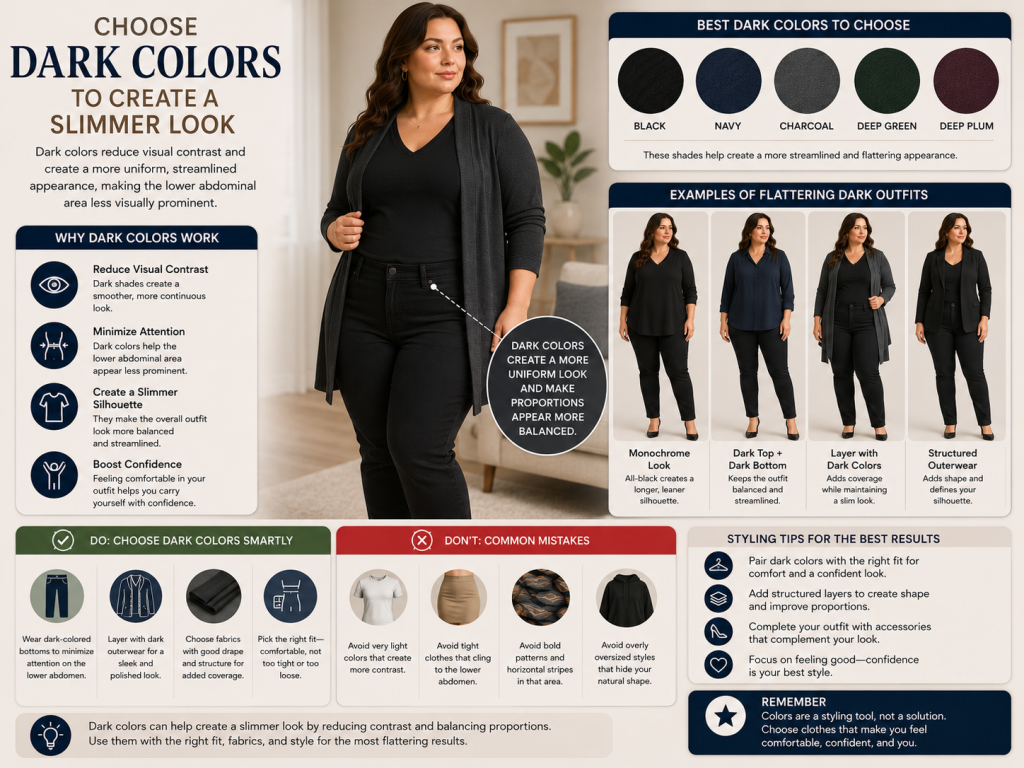
Choose Dark Colors to Create a Slimmer Look
Dark colors can help create a more balanced and streamlined appearance by reducing visual contrast and making the overall outfit look more uniform.
Shades such as black, navy, charcoal, and deep tones can make the lower abdominal area less visually prominent when used thoughtfully.
Wearing darker colors does not change body shape or remove an apron belly, but it can influence how clothing fits visually and how proportions are perceived. For a more flattering look, consider combining dark-colored bottoms with well-fitted tops, structured layers, or fabrics that provide comfortable coverage.
A balanced outfit is more effective than relying only on color. The goal is to use colors as a styling tool to create confidence and comfort while choosing clothes that suit your personal shape.
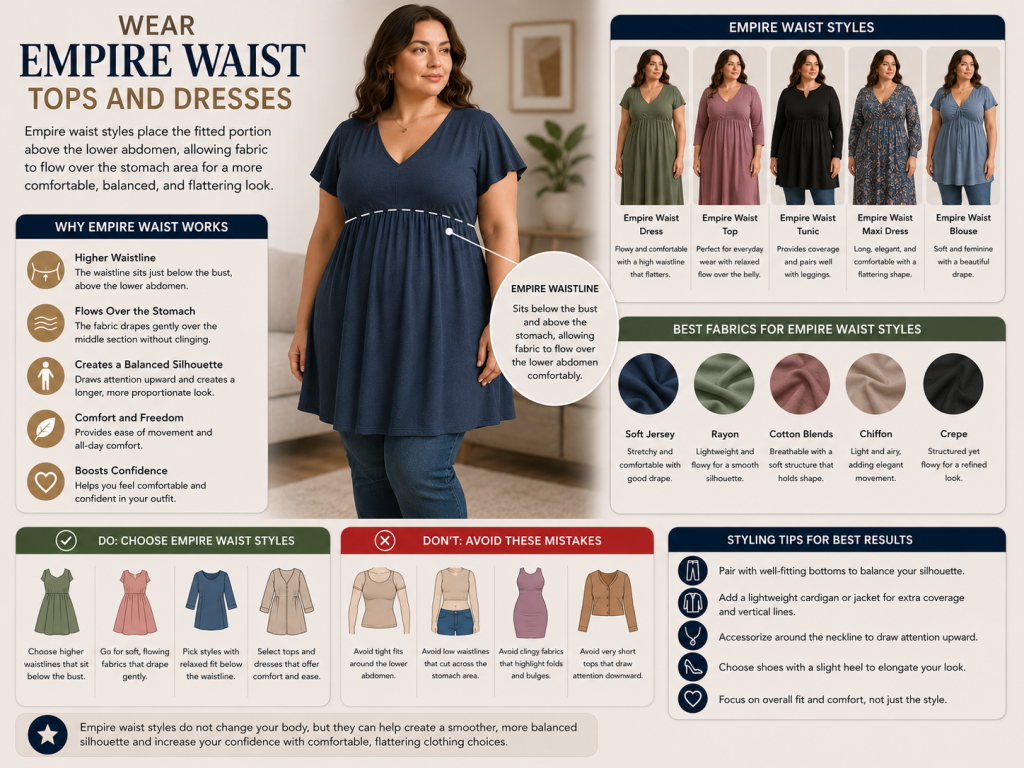
Wear Empire Waist Tops and Dresses
Empire waist tops and dresses can help create a more comfortable and balanced appearance by placing the fitted portion of the garment above the lower abdomen.
This style typically has a higher waistline that falls below the bust and allows the fabric to flow naturally over the stomach area instead of tightly outlining it.
The loose drape can make an apron belly less noticeable while providing freedom of movement. Choose fabrics that have a soft structure and avoid materials that cling tightly to the lower abdomen.
An empire waist design works best when the fit is comfortable and proportionate to the body shape. This style does not change the body itself, but it can be an effective clothing choice for creating a smoother silhouette.
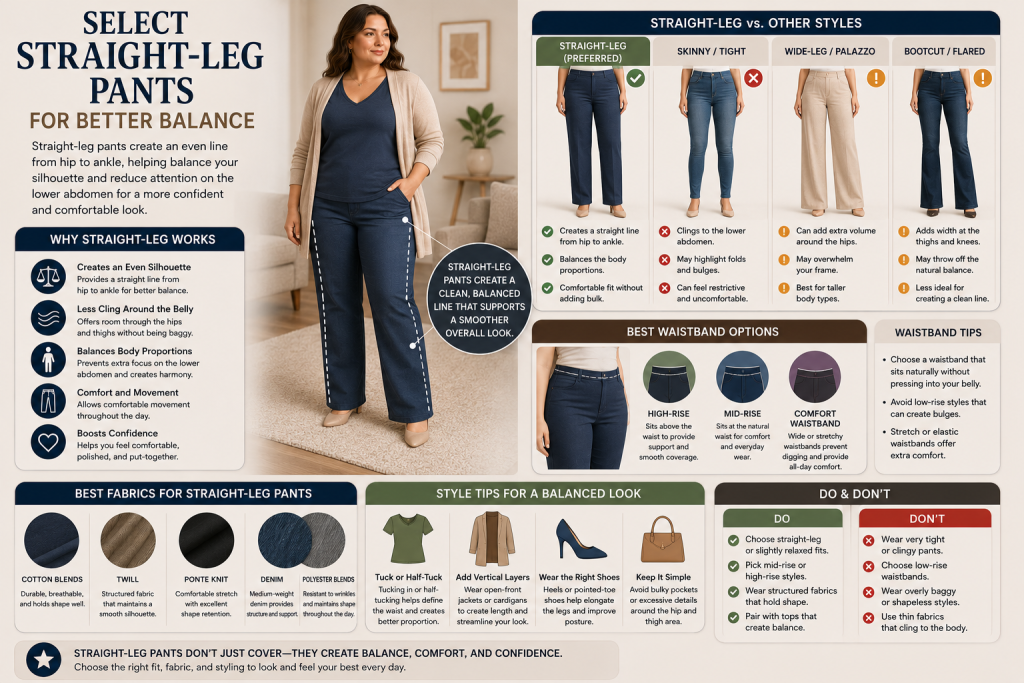
Select Straight-Leg Pants for Better Balance
Straight-leg pants can help create a more balanced silhouette by providing an even shape from the hip down to the ankle. Unlike very tight styles that may emphasize the lower abdomen, straight-leg designs allow more room around the body while maintaining a structured appearance.
This cut can help balance the proportions of an apron belly by preventing too much attention from being focused on one area. Choose pants with a comfortable waistband that sits naturally on the body, such as mid-rise or high-rise options depending on personal comfort.
Fabrics with some structure can also help the pants maintain their shape throughout the day. Straight-leg pants do not hide an apron belly completely, but they can create a more comfortable, proportionate, and polished overall look.
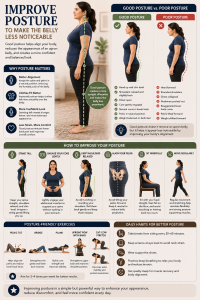
Improve Posture to Make the Belly Less Noticeable
Improving posture can help create a more balanced body appearance and make an apron belly less visually prominent. When a person slouches or tilts the pelvis forward, the abdomen may appear more projected because of changes in body alignment.
Standing with the spine naturally aligned, shoulders relaxed, and the core gently engaged can improve overall posture and how clothing sits on the body. Good posture does not remove an apron belly or change the amount of excess tissue, but it can enhance confidence and create a more upright silhouette.
Simple habits such as mindful sitting, regular movement, and strengthening supporting muscles can help maintain better body alignment. The goal is to improve comfort and presentation rather than expecting posture alone to change abdominal structure.
Related Guide

Final Thoughts
Dressing with an apron belly is about finding styles that provide comfort, coverage, and confidence rather than trying to completely hide your body.
Clothing choices such as high-waisted jeans, flowing dresses, structured fabrics, layering pieces, and comfortable fits can help create a balanced appearance. Shapewear, posture improvement, and thoughtful styling can also support how clothes sit on the body.
The goal is not to follow strict rules but to understand what works best for your individual shape. Choosing outfits that make you feel comfortable and confident can help you enjoy fashion while embracing your natural body changes.