Welcome To Apron Belly
Apron Belly | A Quick Understanding
An apron belly is a common abdominal change that many people experience but often misunderstand.
It is more than ordinary belly fat, involving a hanging fold of excess skin, fat, and soft tissue in the lower abdomen. It can develop after pregnancy, significant weight loss, aging, or long-term weight changes, although it can affect people of different body types.
Understanding what an apron belly is and how it differs from general abdominal fat is the first step toward making informed decisions about your health, comfort, and treatment options.

What Is an Apron Belly? A Complete Guide in 2026
An apron belly is a common abdominal change that involves a hanging fold of excess skin, fat, and soft tissue extending from the lower abdomen. Also known as a pannus or panniculus, it is different from general belly fat because the defining feature is the overhanging tissue rather than only increased abdominal size.
The appearance of an apron belly can vary from a small lower abdominal fold to a larger overhang depending on factors such as skin elasticity, body composition, and previous body changes.
Understanding what an apron belly is, how it looks, and how it differs from other abdominal changes can help people better understand their bodies and make informed decisions based on accurate information.
What Exactly Is an Apron Belly
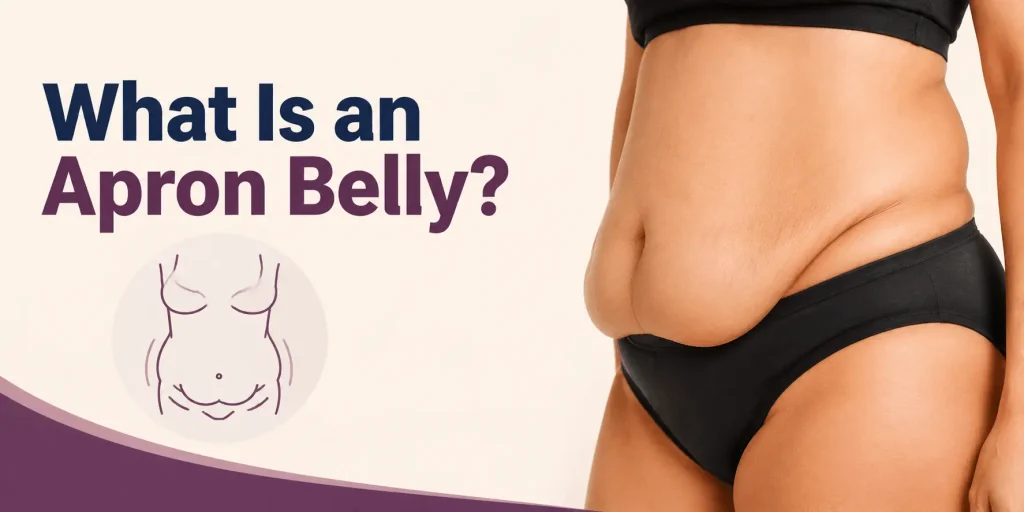
An apron belly refers to a noticeable fold of excess skin, fat, and soft tissue that hangs downward from the lower abdomen, creating an appearance similar to an apron.
Medically, it is often called a pannus or panniculus.
Unlike ordinary belly fat, an apron belly involves a hanging abdominal fold that extends beyond the natural contour of the stomach and may reach the pubic area or, in larger cases, the upper thighs.
The appearance can vary significantly between individuals depending on body composition, skin elasticity, and the amount of retained tissue.
An apron belly is not defined only by body weight; it is primarily identified by the presence of a lower abdominal overhang formed by excess tissue.
The Medical Term Behind Apron Belly: Pannus or Panniculus
The medical terms commonly used for an apron belly are pannus and panniculus, which describe a fold of excess skin and fatty tissue that hangs from the lower abdomen.
The pannus is not simply an increase in belly size; it refers specifically to a downward-hanging layer of tissue that extends beyond the normal abdominal contour.
This fold is mainly made up of subcutaneous fat, which is the fat located directly beneath the skin, along with stretched or loose skin.
The size and appearance of a pannus can differ greatly between individuals, ranging from a small lower abdominal fold to a larger overhang that reaches the pubic region or thighs.
Understanding this medical terminology helps distinguish an apron belly from general abdominal weight gain.
Why Is It Called an “Apron Belly”
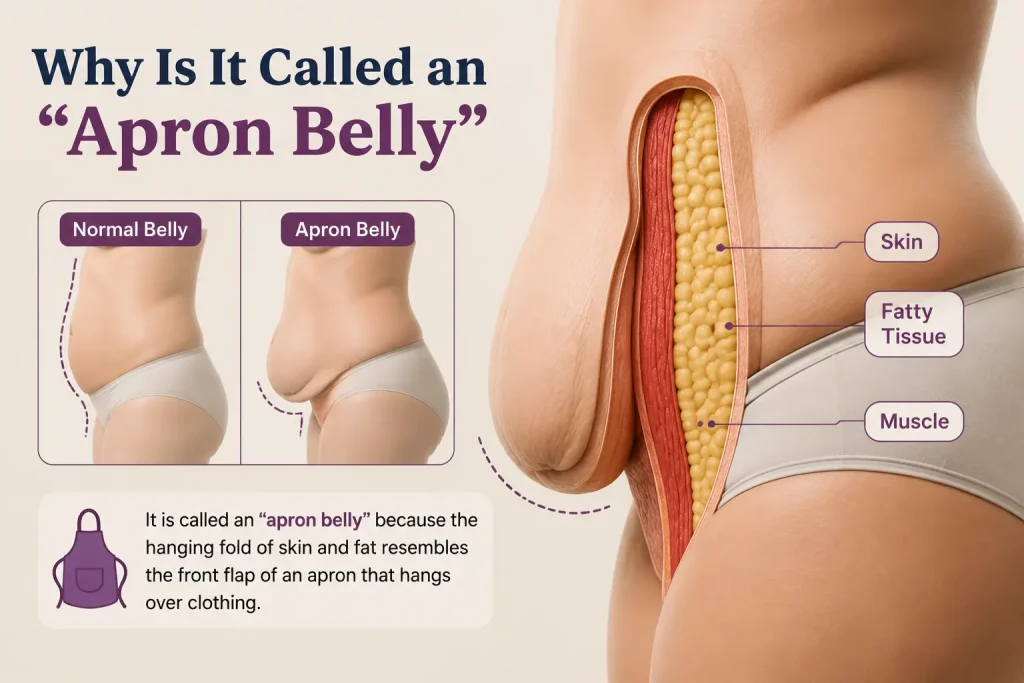
The term “apron belly” comes from the way the lower abdominal tissue hangs from the body, resembling the shape of an apron worn over clothing.
The hanging fold is usually made up of excess skin and fatty tissue that extends downward from the abdomen.
Unlike a typical rounded stomach shape caused by fat accumulation, an apron belly has a noticeable overhanging fold that drapes over the lower abdomen.
The appearance can range from a small fold below the belly button to a larger pannus that reaches the pubic area or thighs. The name is simply a visual description of the shape and position of the tissue, helping people understand this specific type of abdominal change.
How an Apron Belly Looks on the Body
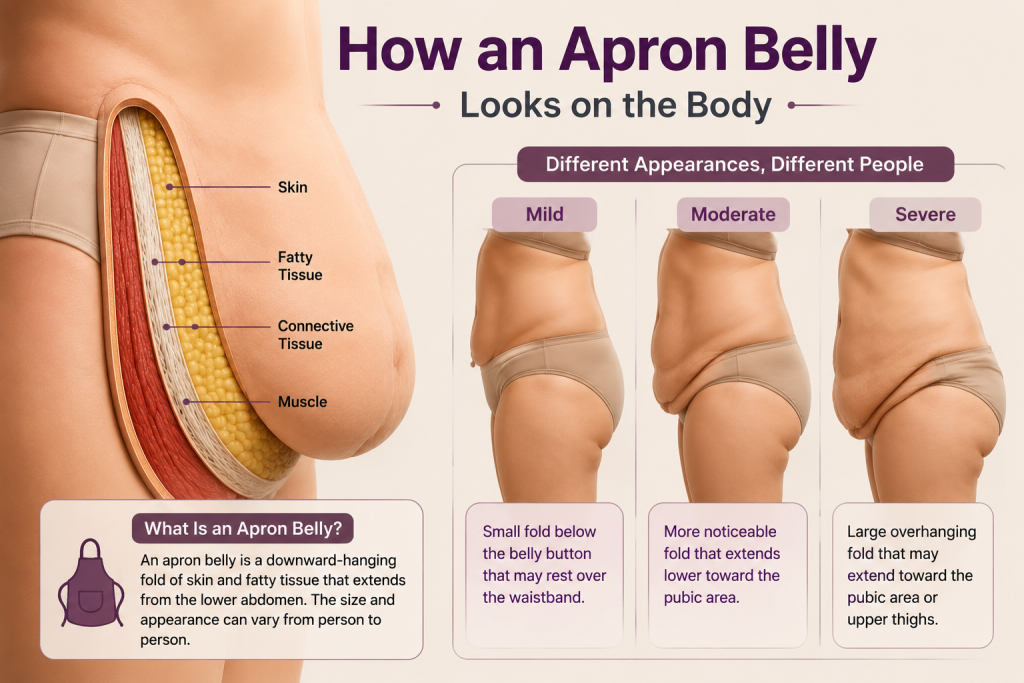
An apron belly appears as a downward-hanging fold of skin and fatty tissue that extends from the lower abdomen. Its appearance can vary widely depending on the amount of excess tissue, skin elasticity, body shape, and changes the body has experienced over time.
In some people, it may look like a small fold below the belly button that rests over the waistband. In others, the abdominal fold can be larger and extend toward the pubic area or upper thighs.
An apron belly is different from general abdominal fullness because the defining feature is the overhanging fold rather than only the amount of fat present.
The shape, size, and position of the fold differ from person to person.
Understanding the Anatomy of an Apron Belly
The Role of Excess Skin in an Apron Belly
Excess skin is one of the main features that creates the hanging appearance of an apron belly.
When skin stretches significantly due to weight changes, pregnancy, or other body changes, it may not fully return to its previous shape because skin elasticity can decrease over time.
The stretched skin can remain loose and form a fold that hangs over the lower abdomen.
This tissue is different from ordinary belly fat because the issue involves reduced skin retraction along with possible underlying fat deposits.
The amount of excess skin varies between individuals and depends on factors such as age, genetics, the duration of stretching, and changes in body size.
Excess skin is a structural change that cannot always be altered through lifestyle changes alone.
The Role of Abdominal Fat in an Apron Belly
Abdominal fat can contribute to the development and appearance of an apron belly by adding volume beneath the skin and increasing the weight of the lower abdominal tissue.
This fat is mainly subcutaneous fat, which is stored directly under the skin and can combine with loose skin to create a hanging fold.
In some cases, deeper abdominal fat, known as visceral fat, may also increase abdominal size, although an apron belly is primarily identified by the external overhanging tissue.
The amount of fat involved differs from person to person and depends on factors such as body composition and weight history.
Abdominal fat is only one part of an apron belly, as skin elasticity and tissue structure also influence its appearance.
Difference Between Normal Belly Fat and an Apron Belly
Normal belly fat refers to fat stored around the abdominal area that may increase the size or shape of the stomach but does not usually create a hanging fold of tissue.
An apron belly is different because it involves an overhanging layer of excess skin and fatty tissue that hangs downward from the lower abdomen.
While fat accumulation can contribute to its appearance, the defining feature of an apron belly is the presence of a noticeable fold caused by changes in skin elasticity and tissue support.
A person can have abdominal fat without having an apron belly, and some individuals with an apron belly may have a significant amount of loose skin after body changes. The difference is mainly based on the structure and position of the abdominal tissue.
How the Lower Abdominal Fold Develops Structurally
A lower abdominal fold develops when changes occur in the skin, fat, and supportive tissues of the abdominal area.
When the abdomen expands due to factors such as weight gain, pregnancy, or other body changes, the skin and connective tissues stretch to accommodate the increased volume.
If these tissues lose some of their ability to retract, the skin may remain loose and form a hanging fold. Additional subcutaneous fat beneath the skin can increase the size and weight of this fold, causing it to hang downward.
The abdominal wall muscles and connective tissues also influence how the area appears.
When support structures become weakened or stretched, the lower abdomen may project outward more noticeably, contributing to the characteristic apron belly appearance.
What Does an Apron Belly Typically Look Like?
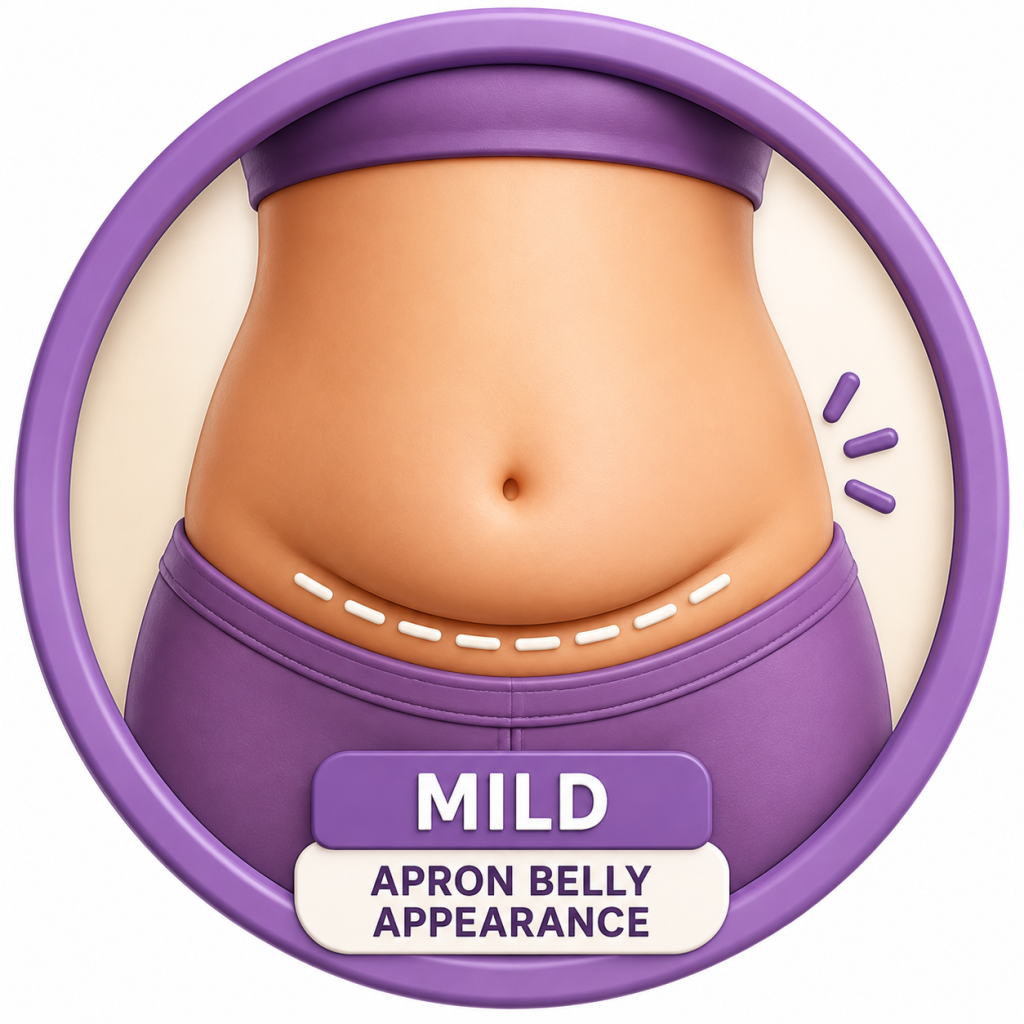
Mild Apron Belly Appearance
A mild apron belly is the earliest or less pronounced form of a lower abdominal overhang, where a small fold of excess skin and fatty tissue develops below the belly button.
The fold may slightly extend over the waistband area but usually does not reach far down toward the pubic region or thighs.
In this stage, the amount of hanging tissue is typically limited, and the appearance can be subtle depending on body shape, skin elasticity, and fat distribution.
Some people may notice the fold more when sitting, bending, or wearing fitted clothing.
A mild apron belly is different from general abdominal fullness because it involves a visible downward fold of tissue rather than only increased stomach size.
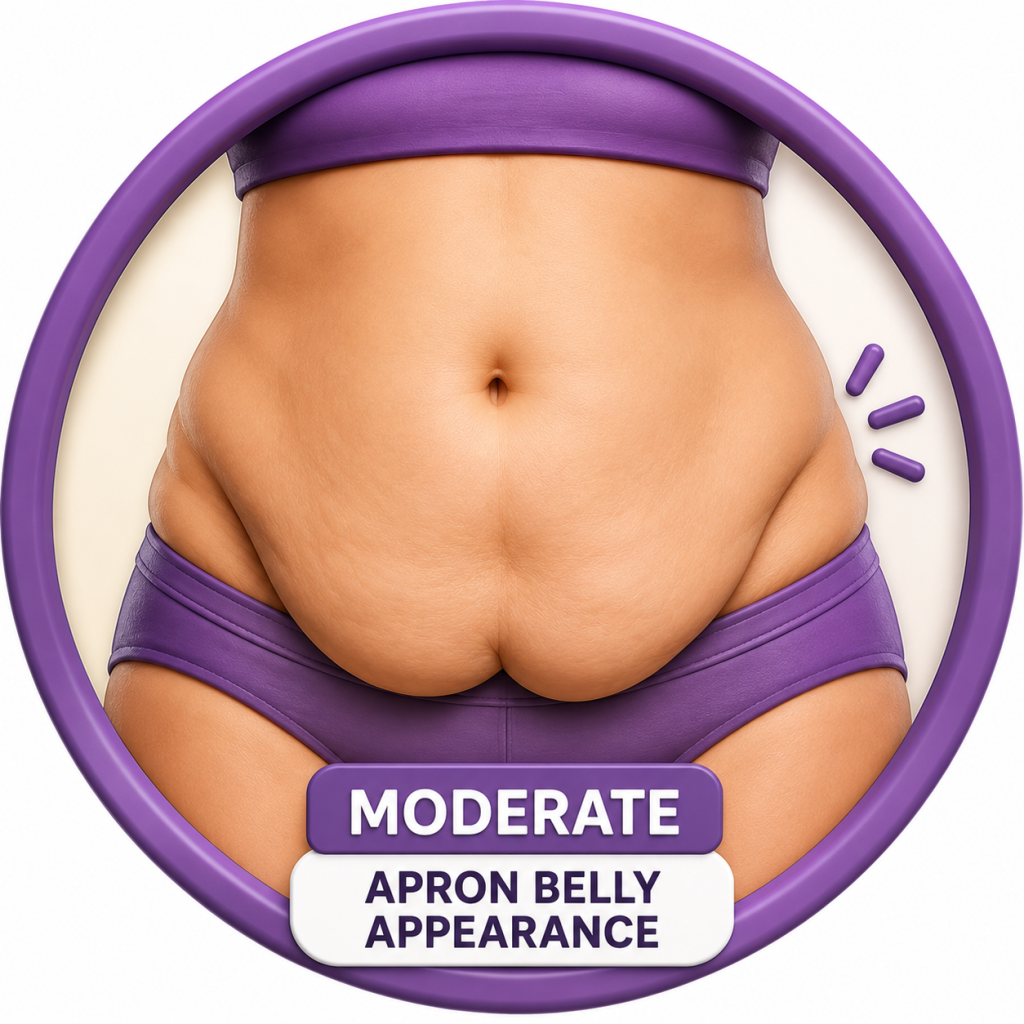
Moderate Apron Belly Appearance
A moderate apron belly involves a more noticeable lower abdominal fold with a greater amount of excess skin and fatty tissue compared with a mild case.
The overhanging tissue may extend below the waistband and partially cover the pubic area, creating a visible change in the shape and contour of the abdomen.
At this stage, the fold is usually more defined and may become more noticeable during movement, sitting, or daily activities.
The appearance depends on factors such as the amount of stretched skin, remaining fat tissue, body structure, and skin elasticity.
A moderate apron belly is not determined only by body size or weight; the key feature is the presence of a distinct hanging fold of tissue in the lower abdomen.
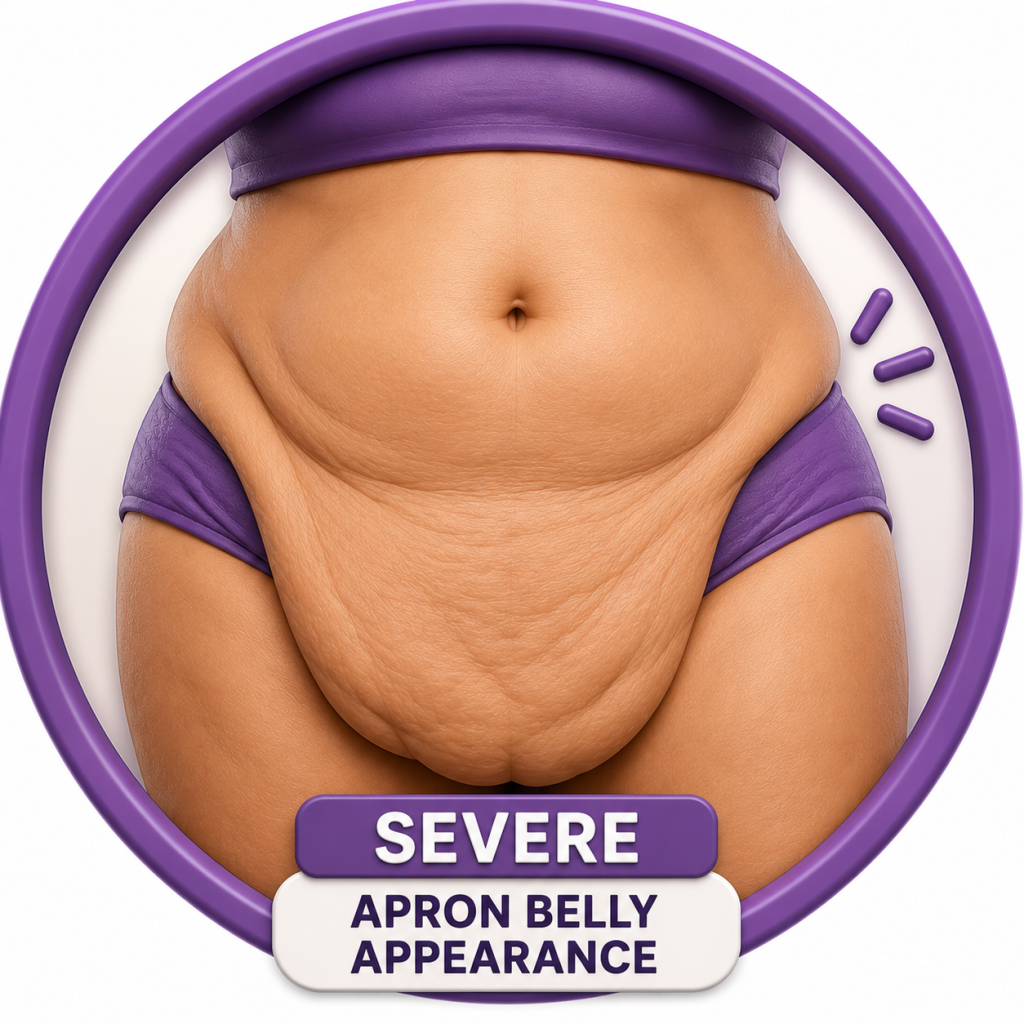
Severe Apron Belly Appearance
A severe apron belly refers to a larger lower abdominal fold where excess skin and fatty tissue hang significantly below the abdomen.
In more advanced cases, the pannus may extend over the pubic area and toward the upper thighs, depending on the amount of retained tissue and individual body structure.
The fold can become heavier due to the combination of loose skin and underlying fat, which may affect comfort, movement, and daily activities.
The appearance is influenced by factors such as skin elasticity, previous body changes, muscle support, and the distribution of abdominal tissue.
A severe apron belly is not defined only by its size or a person’s weight but by the extent of the hanging abdominal fold and how it affects the body.
How Apron Belly Appearance Differs Between Individuals
The appearance of an apron belly can vary significantly from one person to another because body structure, skin quality, fat distribution, and previous physical changes all influence how the lower abdomen looks.
Some individuals may have a small, soft fold that is barely noticeable, while others may develop a larger hanging pannus that extends over the pubic area or thighs.
The amount of excess skin and fat, abdominal muscle support, genetics, age, and changes such as pregnancy or major weight fluctuations can all affect its size and shape.
Two people with similar body weights may have very different apron belly appearances because their tissues respond differently to stretching and body changes. Each apron belly has unique characteristics based on the individual’s anatomy and history.
Common Characteristics of an Apron Belly
Hanging Lower Abdominal Skin and Tissue
One of the most noticeable characteristics of an apron belly is the presence of hanging skin and soft tissue in the lower abdominal area. This occurs when the skin and supporting tissues stretch beyond their ability to fully return to their previous position.
The hanging tissue may include loose skin along with underlying subcutaneous fat, creating a fold that extends downward from the abdomen. The amount of sagging varies between individuals depending on factors such as skin elasticity, body changes, age, and tissue composition.
This feature distinguishes an apron belly from simple abdominal fullness because the main visual difference is the downward-hanging fold rather than only increased abdominal size.
Lower Abdominal Overhang
A lower abdominal overhang describes the way excess tissue extends beyond the natural outline of the stomach.
In an apron belly, this overhang usually develops below the belly button and may rest over the waistband or extend toward the pubic region. The degree of overhang depends on the amount of excess skin, fat distribution, and the body’s ability to support abdominal tissues.
Some individuals may have a small visible fold, while others may experience a larger pannus that affects clothing fit and movement. The overhang is a defining characteristic because it represents a physical change in the position of abdominal tissue rather than only an increase in belly volume.
Skin Fold Formation
Skin fold formation occurs when excess skin and tissue gather together in the lower abdomen, creating a natural crease or fold.
These folds develop when stretched skin does not completely tighten after significant changes in body size or abdominal expansion.
The depth and size of the fold can differ based on the amount of tissue present and individual skin characteristics. A deeper fold may create an area where moisture and friction can accumulate, although the experience varies from person to person.
The presence of a distinct abdominal fold is one of the main features used to describe an apron belly and helps separate it from other types of abdominal shapes.
Changes in Body Contour
An apron belly can create noticeable changes in the overall contour and shape of the abdomen.
Instead of following a smooth abdominal curve, the lower stomach may appear more prominent because of the downward-hanging fold of skin and tissue.
These contour changes can influence how clothing fits and how the abdominal area appears from different positions.
The extent of the change depends on factors such as tissue amount, muscle support, skin elasticity, and individual body structure. An apron belly does not look identical in everyone, as each person’s abdominal contour is shaped by their unique anatomy and history of body changes.
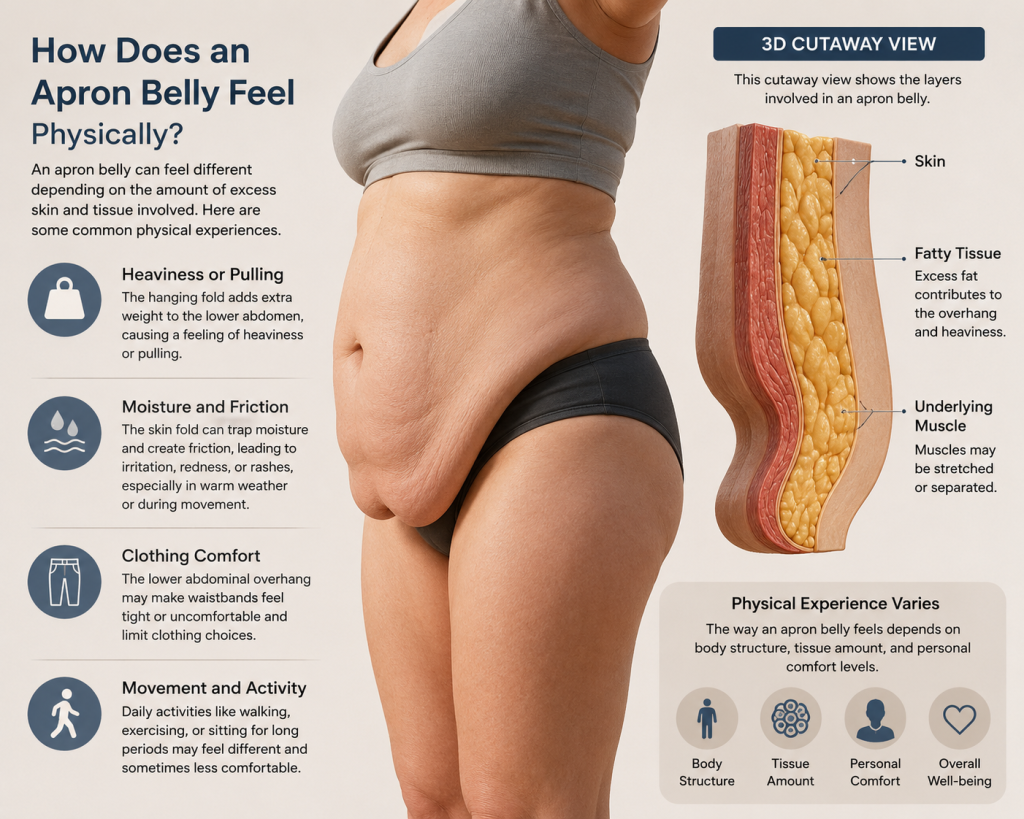
How Does an Apron Belly Feel Physically?
An apron belly can feel different depending on the amount of excess skin and tissue involved.
Some people experience a feeling of heaviness or pulling in the lower abdomen because the hanging fold adds extra weight to the front of the body.
The skin fold may create areas where moisture and friction collect, which can lead to irritation or discomfort, especially during movement or warm weather.
An apron belly may also affect clothing choices, as the lower abdominal overhang can make certain waistbands or fitted garments feel uncomfortable.
Daily activities such as walking, exercising, or sitting for long periods may feel different for some individuals. The physical experience varies based on body structure, tissue amount, and personal comfort.
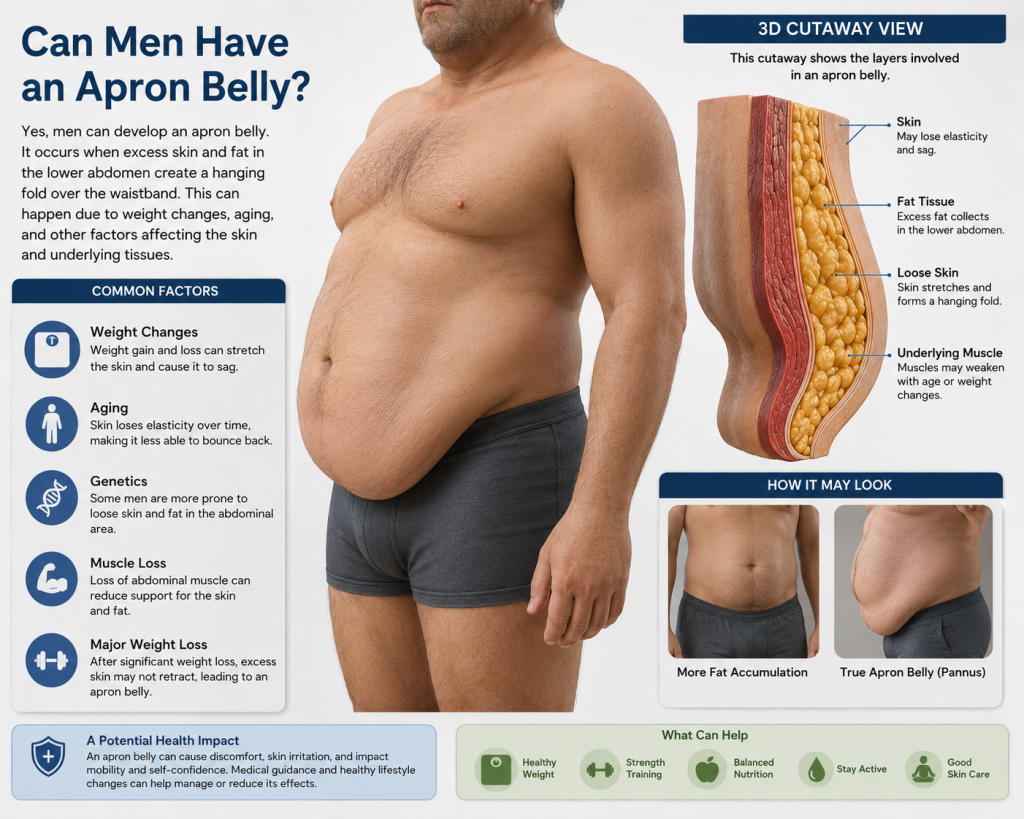
Can Men Have an Apron Belly
Men can also develop an apron belly, as the condition is related to changes in abdominal skin, fat, and supporting tissues rather than being specific to women.
In men, an apron belly may appear as a hanging fold of excess skin and fatty tissue in the lower abdomen, often extending over the waistband area.
The appearance can vary depending on body composition, weight history, skin elasticity, age, and genetics.
While some men mainly experience increased abdominal fat, others may develop a true pannus where loose tissue hangs downward. Factors such as major weight changes, aging, and reduced skin firmness can influence its development.
The structure of the male abdomen may differ from the female abdomen, but the defining feature remains the same: a noticeable lower abdominal overhang.
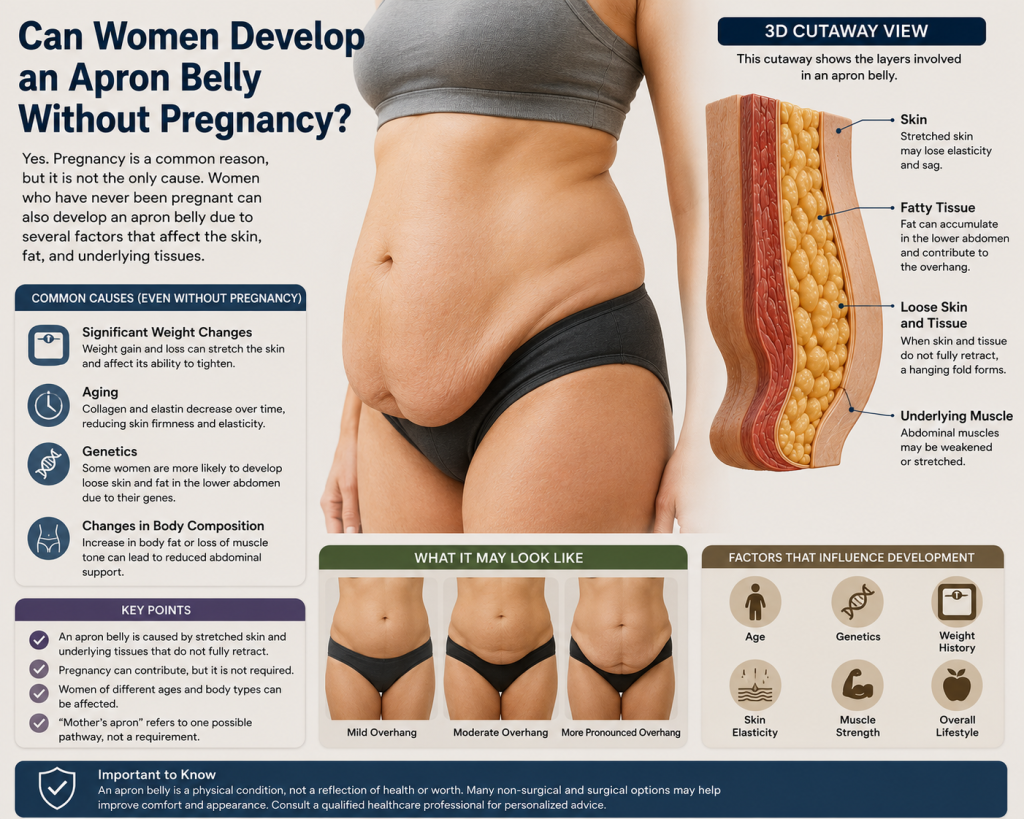
Can Women Develop an Apron Belly Without Pregnancy
Although pregnancy is a common reason some women develop an apron belly, it is not the only cause.
Women who have never been pregnant can also experience this condition due to factors such as significant weight changes, aging, reduced skin elasticity, genetics, or changes in body composition. An apron belly develops when the skin and underlying tissues in the lower abdomen stretch and do not fully return to their previous position, creating a hanging fold.
Pregnancy can contribute by stretching abdominal skin and muscles, but the condition is not limited to mothers.
The term “mother’s apron” describes one possible pathway of development, not a requirement. Apron belly can occur in women at different ages and body types.
Does Every Hanging Belly Mean an Apron Belly
Not every hanging belly is considered an apron belly. A lower abdominal fold may result from normal fat distribution, temporary weight changes, loose skin, or natural differences in body shape.
An apron belly is specifically identified by a noticeable overhanging fold of excess skin and tissue that hangs downward from the lower abdomen.
The key difference is the presence of a distinct pannus, where stretched skin and underlying tissue extend beyond the natural abdominal contour. A small lower belly curve or soft abdominal area does not always indicate an apron belly.
Factors such as skin elasticity, body composition, age, and previous body changes influence how the abdomen appears. Understanding these differences helps avoid confusing normal body variations with a true apron belly.
Why Understanding Apron Belly Matters
Understanding an apron belly is important because it helps people recognize that this condition involves more than just appearance.
An apron belly can affect how the body feels and functions, depending on the size and weight of the hanging tissue.
Some individuals may experience challenges such as skin irritation, discomfort, difficulty with clothing fit, or changes in daily movement. Beyond physical effects, the visible nature of an apron belly may also influence confidence and body image.
Learning about the condition allows individuals to better understand their bodies and make informed decisions based on accurate information rather than unrealistic expectations. Every apron belly is different, and understanding its structure, characteristics, and impact is the first step toward choosing appropriate options for personal health and comfort.
Frequently Asked Questions
Is an apron belly the same as belly fat?
An apron belly is not the same as general belly fat. Belly fat refers to fat stored around the abdominal area, while an apron belly involves a hanging fold of excess skin and tissue that extends downward from the lower abdomen. Fat can contribute to its appearance, but loose skin and reduced tissue elasticity are important factors that define the condition.
What is the medical name for an apron belly?
The medical terms commonly used for an apron belly are pannus or panniculus. These terms describe a fold of excess skin and fatty tissue that hangs from the lower abdomen. Healthcare professionals may use these terms when discussing the structure and characteristics of the abdominal overhang.
Can an apron belly happen without pregnancy?
Yes, an apron belly can develop without pregnancy. While pregnancy can stretch abdominal skin and tissues, other factors such as major weight changes, aging, genetics, and reduced skin elasticity can also contribute to its formation in women who have never been pregnant.
Does every person with excess belly skin have an apron belly?
No, not everyone with excess belly skin has an apron belly. The condition specifically refers to a noticeable lower abdominal fold that hangs downward beyond the natural stomach contour. Mild loose skin or a small belly fold may not meet the characteristics of an apron belly.
How low can an apron belly extend?
The extent of an apron belly varies between individuals. In mild cases, the fold may remain below the belly button or waistband area. In more pronounced cases, the hanging tissue may extend toward the pubic region or upper thighs, depending on the amount of excess skin and fat.
Is an apron belly permanent?
An apron belly may persist when stretched skin and supporting tissues do not return to their previous position. Lifestyle changes can influence body composition, but they cannot always reverse significant loose skin. The permanence depends on factors such as tissue elasticity, body changes, and the amount of excess tissue present.
Related Guide

Final Thoughts
An apron belly is a unique physical change that differs from person to person.
It involves more than just body weight, as the appearance depends on the relationship between skin, fat, tissue support, and individual anatomy.
While some people may have a small lower abdominal fold, others may experience a more noticeable overhang that affects comfort and daily activities.
Learning about the structure and characteristics of an apron belly helps remove confusion and unrealistic expectations.
Every body develops differently, and understanding these changes is an important step toward making informed choices about personal health, comfort, and overall well-being.