What Causes Apron Belly | A 2026 Guide
An apron belly develops when changes in the abdominal area affect the balance between skin, fat, connective tissues, and muscle support.
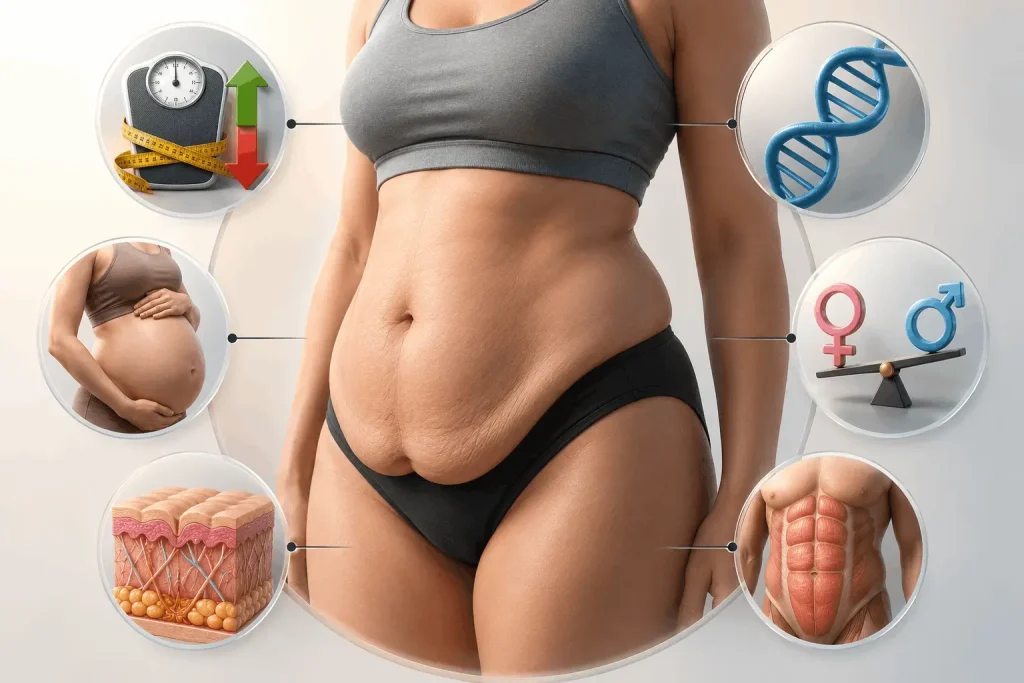
It is not caused by a single factor, as different people may experience it due to different body changes throughout life. Common contributors include major weight fluctuations, pregnancy, reduced skin elasticity with age, genetics, hormonal changes, and changes in abdominal structure.
These factors can influence how much the skin stretches, how fat is distributed, and how well the tissues return to their previous shape. Understanding the causes of an apron belly helps explain why it can appear in people with different body types and histories.
Each person’s experience is unique because the body responds differently to changes over time.
Weight Gain and Weight Loss Cycles
Repeated cycles of gaining and losing weight can contribute to the development of an apron belly by repeatedly stretching the skin and abdominal tissues.
When body weight increases, fat cells expand, causing the skin to stretch to accommodate the added volume. If weight is later lost, the fat may decrease, but stretched skin does not always return completely to its previous shape. Over time, multiple weight fluctuations can reduce skin elasticity and make it more difficult for the abdominal area to retract naturally.
This can leave behind loose skin and retained tissue that may form a hanging lower abdominal fold. The extent of change depends on factors such as the amount of weight gained, duration of stretching, and individual skin elasticity.
Significant or Rapid Weight Loss
Significant or rapid weight loss can contribute to the development of an apron belly when the skin does not have enough elasticity to adjust to the body’s reduced size.
During major weight gain, the skin stretches to cover the increased volume of fat and tissue. After losing a large amount of weight, the fat beneath the skin decreases, but the stretched skin may remain loose instead of returning to its original position.
This can create a hanging fold of excess skin in the lower abdomen. The likelihood of this occurring depends on factors such as the amount of weight lost, how quickly the loss happened, and the individual’s skin elasticity.
Large weight reductions, including those after bariatric procedures, may leave more noticeable excess abdominal skin.
Pregnancy and Multiple Pregnancies
Pregnancy can contribute to the development of an apron belly because the abdominal skin, connective tissues, and muscles stretch significantly to accommodate the growing baby.
After childbirth, these tissues may not always return completely to their previous position, leaving behind a lower abdominal fold of loose skin and tissue.
Multiple pregnancies can increase this effect because the abdominal area experiences repeated stretching and recovery periods. Each pregnancy places additional stress on the skin and abdominal support structures, which may make it more difficult for the tissues to regain their original firmness.
The extent of changes after pregnancy varies between individuals and depends on factors such as the amount of stretching, tissue elasticity, and the body’s natural recovery process.
Abdominal wall Weakness and Diastasis Recti
Abdominal wall weakness can contribute to the development of an apron belly by reducing the support that normally helps maintain the shape and position of the abdomen. A common example is diastasis recti, a condition where the two sides of the rectus abdominis muscles separate along the middle line of the abdomen.
This separation can occur when the connective tissue between the muscles becomes stretched and weakened. As a result, the abdominal area may appear more rounded or less supported, allowing lower abdominal tissue to project outward.
Diastasis recti does not create excess skin by itself, but the reduced muscle support can influence the overall appearance of the abdomen and contribute to a more noticeable lower abdominal overhang.
Sedentary Lifestyle and Body Composition Changes
A sedentary lifestyle can contribute to apron belly development by affecting body composition and promoting changes in fat storage and muscle strength.
Limited physical activity may reduce muscle tone, including support from the abdominal muscles, while also making it easier for excess body fat to accumulate.
Over time, these changes can alter the balance between muscle, fat, and connective tissues in the abdominal area. Reduced movement does not directly create an apron belly on its own, but it can contribute to conditions that increase abdominal tissue volume and reduce structural support.
The impact varies between individuals based on factors such as activity levels, body composition, and overall lifestyle patterns. Maintaining regular movement helps support healthier body composition and abdominal strength.
Aging and Reduced Skin Elasticity
Aging can contribute to the development of an apron belly because the skin naturally becomes less elastic over time.
As people age, the body produces lower amounts of collagen and elastin, which are important proteins that help skin maintain firmness and its ability to return after stretching.
When skin elasticity decreases, stretched abdominal skin may not retract as effectively, allowing loose tissue to remain in the lower abdomen. This reduced ability of the skin to tighten can make a hanging abdominal fold more noticeable.
The effect of aging varies between individuals depending on factors such as genetics, skin quality, and previous changes in body size. Reduced skin elasticity is a natural process that can influence how the abdomen changes over time.
Genetics and Fat Distribution
Genetics can influence the likelihood of developing an apron belly by affecting how the body stores fat, skin elasticity, and overall body shape.
Some individuals naturally tend to store more fat in the abdominal area or may have inherited differences in how their skin responds to stretching.
Genetic factors can also influence the strength and flexibility of connective tissues that help maintain skin structure. Because of these inherited characteristics, two people with similar body sizes or weight changes may experience different abdominal changes.
Genetics does not guarantee that someone will develop an apron belly, but it can affect how fat is distributed and how well the skin adapts to changes in the body over time. These natural differences contribute to the variation seen between individuals.
Hormonal Changes (such as Menopause)
Hormonal changes can influence the development of an apron belly by affecting fat storage patterns, skin quality, and body composition.
During menopause, changes in hormone levels, particularly a decline in estrogen, can alter how the body stores fat. Some individuals may experience a shift toward increased fat accumulation around the abdominal area. Hormonal changes can also affect collagen production, which plays an important role in maintaining skin firmness and elasticity.
As skin becomes less resilient, it may have more difficulty returning to its previous shape after stretching. These changes do not automatically cause an apron belly, but they can contribute to abdominal tissue changes in some people.
The impact of hormonal shifts varies depending on individual health, genetics, and body characteristics.
Previous Abdominal Surgeries (such as C-section)
Previous abdominal surgeries, including C-sections, can influence the appearance of the lower abdomen by changing the structure of the abdominal tissues.
Surgical procedures may affect the skin, connective tissue, and the way tissues heal after an incision. In some cases, scar tissue can create areas where the skin attaches differently, which may contribute to a visible fold or change in the lower abdominal contour. A C-section can also involve changes to the abdominal wall that may affect how the area looks after recovery.
However, having a previous abdominal surgery does not mean a person will automatically develop an apron belly. The impact depends on individual healing, tissue characteristics, and the body’s natural response after surgery.
Certain Medical Conditions that May Influence Weight Gain
Certain medical conditions can affect body weight by influencing metabolism, hormone levels, or the way the body stores fat.
Conditions such as hypothyroidism, polycystic ovary syndrome (PCOS), Cushing’s syndrome, and some metabolic disorders may make weight management more challenging for some individuals. When these conditions contribute to increased weight gain, particularly around the abdominal area, they may influence changes in body composition over time.
However, medical conditions alone do not directly create an apron belly; they may contribute by affecting factors such as fat accumulation and body weight changes.
The development of an apron belly still depends on how the skin, tissues, and abdominal structure respond to these changes. Proper medical evaluation is important for understanding individual causes.
Frequently Asked Questions
Can weight loss alone prevent an apron belly
Weight loss can help reduce the amount of fat stored around the abdomen, but it does not always prevent an apron belly from developing. The final appearance of the lower abdomen also depends on how the skin responds after body size changes.
When skin has been stretched significantly, it may not fully tighten after weight reduction. Factors such as the duration of being at a higher weight, age, genetics, and natural skin elasticity can influence the outcome. Maintaining gradual weight changes and a stable weight may support healthier skin adaptation, but it cannot guarantee that excess abdominal skin will not remain.
Why do some people develop an apron belly after losing weight
Some people develop an apron belly after weight loss because the skin and connective tissues may remain stretched after a large reduction in body size. During weight gain, the skin expands to accommodate additional tissue. When the weight is removed, the underlying fat decreases, but the skin does not always shrink at the same rate or return completely to its previous position.
The amount of remaining loose tissue depends on individual factors such as the amount of weight lost, how long the skin was stretched, and personal skin elasticity. This is why two people with similar weight loss results may experience different abdominal changes.
Does building abdominal muscles prevent an apron belly
Strengthening abdominal muscles can improve core support and overall abdominal function, but it does not completely prevent or remove an apron belly. An apron belly involves changes in skin, fat, and connective tissues, which are not corrected by muscle development alone.
Stronger abdominal muscles may improve the underlying support and posture, but stretched skin or excess tissue can remain even when the muscles are well developed.
The development of an apron belly depends on multiple factors, including skin elasticity, body changes, and tissue response. Exercise is beneficial for overall health but cannot fully control how skin adapts after significant stretching.
Can an apron belly develop even if someone maintains a healthy lifestyle
Yes, an apron belly can develop even in people who maintain healthy habits. Factors such as genetics, aging, pregnancy, previous weight changes, and natural skin elasticity can influence how the abdominal area changes over time.
A healthy lifestyle supports overall body composition and helps maintain stable weight, but it cannot completely control inherited skin characteristics or how tissues respond to stretching. Some individuals may develop a lower abdominal fold despite regular exercise and balanced nutrition because the condition is related to structural changes in the skin and tissues, not only lifestyle choices. Understanding this helps create more realistic expectations about body changes.
Related Guide

Conclusion
An apron belly is the result of changes that affect the lower abdominal tissues, including skin, fat, and structural support. While some factors may increase the likelihood of developing an apron belly, no single cause affects everyone in the same way.
Weight changes, pregnancy, aging, genetics, lifestyle patterns, hormonal shifts, and other body-related factors can influence how the abdomen changes over time. Understanding these causes helps create realistic expectations and prevents common misconceptions about why an apron belly develops.
Recognizing the individual factors involved allows people to better understand their bodies and seek accurate information based on their specific situation rather than general assumptions.